What Happens If You Leave a Tree Stump in the Ground Instead of Grinding It?
Contact Us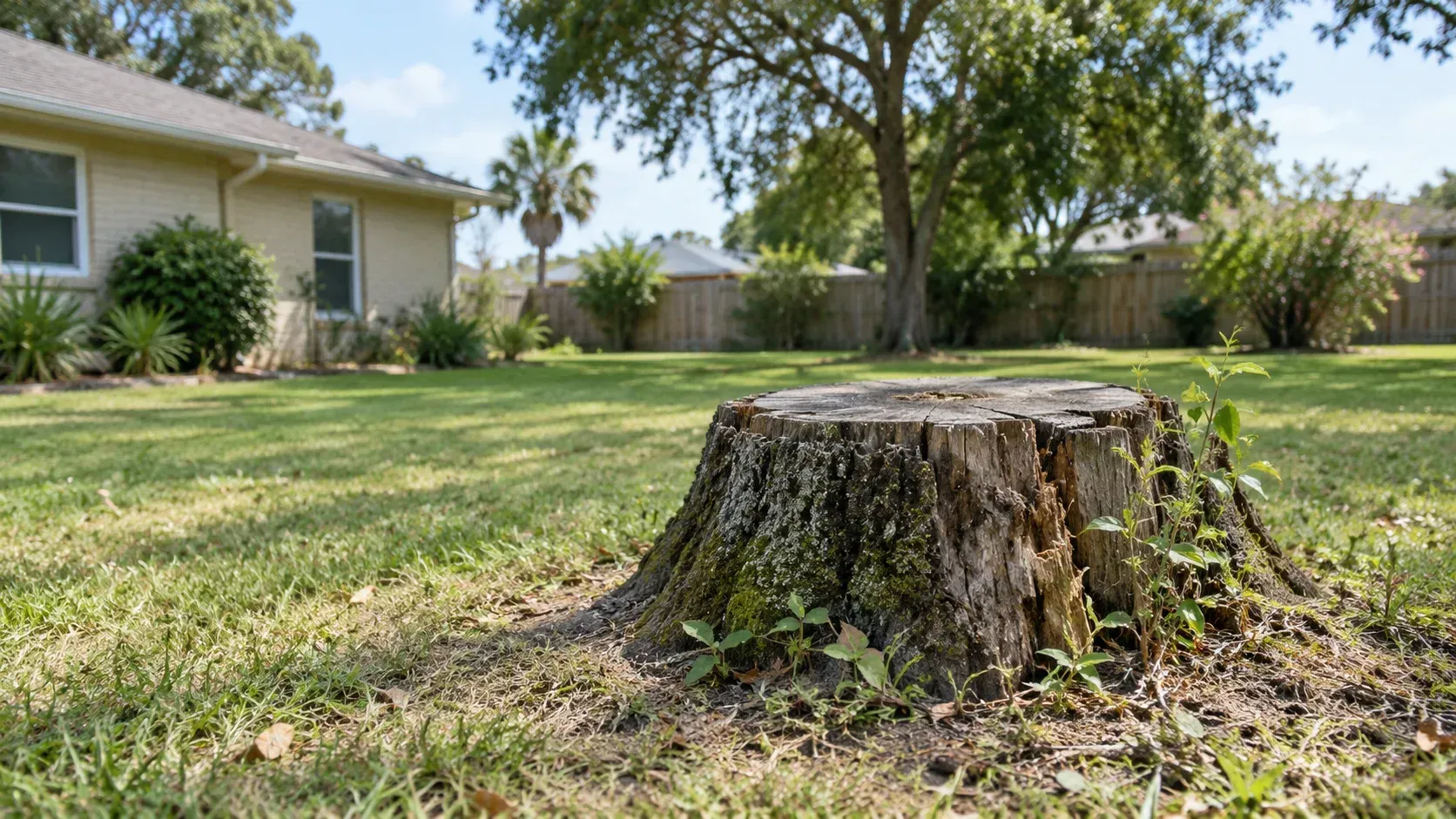
Table of Contents
- Introduction
- What a Tree Stump Keeps Doing After the Tree Is Gone
- Tree Stump Problems That Show Up First
- Pests, Decay, and What a Stump Actually Attracts
- Why Regrowth Happens and Keeps Happening
- Replanting in the Same Spot
- Stump Grinding Benefits Beyond Appearance
- Conclusion
- Get a Stump Grinding Quote
- Frequently Asked Questions
Key Takeaways
- A tree stump left in the ground stays a tripping hazard, becomes a food source for wood-boring insects, and can harbor fungal decay.
- Many species keep sending up shoots from the stump and root collar for years, and mowing them off does not stop it.
- A stump is a decay reservoir sitting next to whatever you plant in the same spot.
- Grinding removes the stump and the surface roots near it. It does not remove the whole root system, and nobody should tell you otherwise.
- The pest risk is real but indirect. A stump is an attractant near the house, not proof of an infestation in it.
Introduction
Leaving a tree stump in the ground means it stays a tripping hazard, becomes a food source and shelter for wood-boring insects, and can harbor fungal decay that spreads to nearby plantings. Many species also keep pushing up shoots from the stump and root collar long after the canopy is gone.
None of that arrives on a schedule, which is why the stump sits there for two years looking harmless. We handle stump grinding across Corpus Christi, Nueces County, and the surrounding South Texas communities, and the stumps we get called about are rarely the ones that were ground down the same week the tree came out.
What a Tree Stump Keeps Doing After the Tree Is Gone
A cut stump is still living wood for a while, and then it is dead wood sitting in warm, damp soil. Both states cause problems, just different ones.
While it is alive, the root system still has stored energy and many species will spend it trying to regrow. Once it dies, it becomes exactly what decay organisms and wood-boring insects are looking for: a large piece of wood, already softening, in contact with the ground.
On the Texas coast both stages run faster than they do inland. Heat, humidity, and a long growing season all speed up decay and keep insects active for more of the year.
So the stump is never really static. It is either trying to regrow or quietly breaking down, and in a yard you use, neither one is neutral.
Tree Stump Problems That Show Up First
The practical problems arrive before the biological ones, and they are the reasons most people finally call.
- Tripping. A ground-level stump disappears into grass, especially for kids and anyone walking the yard after dark.
- Mower damage. Hitting a stump or a surface root ruins blades and can damage the deck. It is the most common expensive version of this.
- Mowing around it forever. Every cut becomes a detour, and the grass right against the stump never looks right.
- It takes up usable space. A stump in the middle of a yard dictates where the patio, the play set, or the garden bed cannot go.
- Curb appeal. This one is cosmetic, and it is also the first thing anyone selling a house notices.
Our own stump grinding page lists insect infestations, spreading tree disease, and regrowth as reasons to remove a stump. The three sections below are what those actually look like.
Pests, Decay, and What a Stump Actually Attracts
A decaying stump is an attractant, not an automatic infestation. That distinction matters and most articles on this topic skip it.
What a softening stump reliably offers is food and shelter. Carpenter ants, termites, and various wood-boring beetles are all drawn to wood that is damp and already breaking down. A stump within a few feet of a foundation, a deck, or a fence post is a food source sitting next to wood you care about.
Fungal decay works the same way. The fungi that break down the stump are living in soil you may plant in later, and some root-rot organisms persist in old root systems rather than dying with the tree.
Being honest about the limits here:
- A stump in the yard does not mean termites are in your house
- Grinding a stump is not a pest treatment and does not resolve an existing infestation
- If you are seeing insect activity near the structure, that is a conversation for a pest control professional, not a tree crew
- Removing the stump removes the attractant, which is a prevention step rather than a cure
If the tree came out because of disease, mention that when you call. It changes how the stump and the surrounding soil should be handled.
Why Regrowth Happens and Keeps Happening
Stump sprouting is the problem that surprises people most, because they assumed cutting the tree ended the tree.
It often does not. Many broadleaf species in this region will send up shoots from the stump itself or from the root collar, drawing on energy still stored in the root system. Those shoots are fast, weak, and numerous.
Cutting them off does not fix it. Mowing or lopping the sprouts removes the foliage but leaves the roots, and the roots respond by sending up more. That cycle can run for years on a vigorous species.
Grinding changes the equation because it removes the stump and the root collar where most of those shoots originate. It is worth being straight about what that does and does not do: grinding takes out the stump and the roots immediately around it, not the entire root system spreading out under the lawn. Remaining roots generally decay in place rather than resprouting, but anyone promising you a root-free yard is overselling the machine.
Replanting in the Same Spot
If you plan to plant another tree where the old one stood, the stump has to go, and even then the spot needs attention.
What matters when replanting:
- The stump physically occupies the root zone a new tree needs
- Decay organisms in the old roots can reach a young tree with no defenses
- Grindings are wood, not soil. Left in the hole, they tie up nitrogen as they break down, which starves a new planting
- Settling. A hole backfilled with chips will sink over the next year or two
The practical approach is to grind, remove or relocate the grindings rather than burying them all in the hole, backfill with soil, and let the spot settle before planting. Where a replant is part of a larger plan, it is worth coordinating with the landscaping and lawn care side of the project rather than treating it as two separate jobs.
Grindings make genuinely good mulch spread elsewhere on the property. They make a poor planting medium in the hole they came from.
Stump Grinding Benefits Beyond Appearance
The appearance is the part people mention and the smallest part of the value.
| Option | What it costs you later |
|---|---|
| Leave the stump in place | Hazard, mower damage, insect attractant, decay, and sprouting on many species |
| Cut it flush, no grinding | Looks better briefly, still sprouts, still decays, still blocks replanting |
| Grind it | Hazard and sprouting resolved, spot usable again, remaining roots decay in place |
What grinding actually settles:
- Removes the tripping and mower hazard permanently
- Takes out the stump and root collar where most sprouting starts
- Removes a decaying food source near structures and fencing
- Frees the footprint for planting, hardscape, or just lawn
- Ends the mowing detour
- Clears the way for replanting in or near the same spot
We grind stumps down to a few inches below grade or remove them completely, remove the debris, and leave the lawn tidy. On a complete removal, grinding is normally part of the job rather than a separate call, which is the easiest version of this decision: handle it while the crew and the equipment are already on site.
Conclusion
A stump is not a finished job, it is a slow one. It stays a hazard, it feeds insects and decay as it breaks down, and on many species it keeps trying to grow back no matter how often you mow the shoots off. Grinding it is cheaper and simpler when the tree comes out than when you have spent three summers working around it. If the stump is already there, the question is just whether you want the yard back.
Get a Stump Grinding Quote
If there is a stump sitting in your yard, tell us roughly how big it is and how close it is to the house, a fence, or a driveway. Tree Care Express Services covers Corpus Christi, Portland, Ingleside, Aransas Pass, Robstown, Taft, and Gregory. Call (361) 283-2840, Monday through Friday, or
tell us where the stump is and what is around it. If you are weighing the decision on price, we have also written about
what stump grinding costs around Corpus Christi.
Frequently Asked Questions
Is it bad to leave a tree stump in the ground?
It stays a tripping and mower hazard, becomes a food source for wood-boring insects as it decays, and can harbor fungal decay near new plantings. Many species also keep sending up shoots from the stump for years. None of it is urgent, and all of it compounds.
Do tree stumps attract termites?
A decaying stump attracts wood-boring insects, termites among them, because it offers damp wood that is already breaking down. That makes it an attractant near the house rather than evidence of an infestation in it. For activity near the structure, talk to a pest control professional.
Will a ground stump grow back?
Usually not, because grinding removes the stump and the root collar where most sprouting starts. A stump that is only cut flush, without grinding, commonly resprouts, and mowing the shoots off does not stop the roots from sending up more.
Does stump grinding remove the whole root system?
No. Grinding removes the stump and the roots immediately around it, not the full root system spreading under the lawn. Remaining roots typically decay in place rather than resprouting. Anyone promising a completely root-free yard is overstating what the equipment does.
Can I plant a new tree where the old stump was?
After grinding, yes, with care. Remove or relocate most of the grindings rather than burying them in the hole, backfill with soil, and let the ground settle. Wood chips left in place tie up nitrogen as they break down and can starve a new planting.