How Much Does Stump Grinding Cost in Corpus Christi, Texas?
Contact Us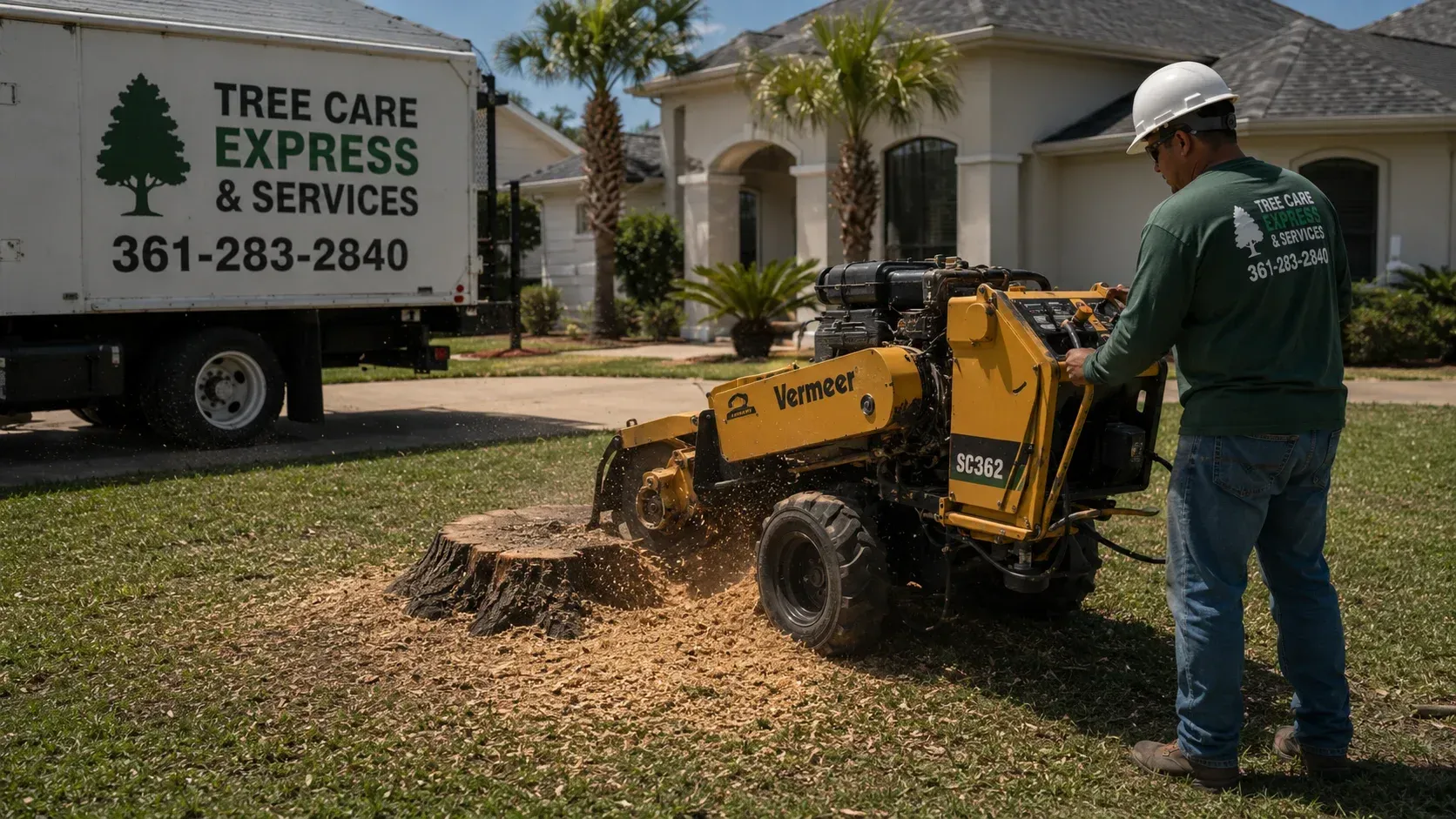
Table of Contents
- Introduction
- What You Can Expect to Pay
- How Stump Grinding Is Usually Priced
- What Affects the Cost of Stump Grinding
- Grinding vs. Full Stump Removal
- What Happens During the Job
- What the Price Usually Does and Does Not Include
- Should You Rent a Grinder Instead?
- Conclusion
- Book a Discovery Call
- Frequently Asked Questions
Key Takeaways
- Stump grinding in Corpus Christi commonly falls somewhere around $100 to $400 for a single stump, with larger or difficult jobs going higher. On-site quotes are the only reliable numbers.
- Size is the biggest cost driver. Many local companies price by the diameter of the stump, often charging a per-inch rate on top of a minimum fee.
- Access, root spread, hidden rocks, and the number of stumps all move the price up or down.
- Grinding removes the stump and surface roots but leaves the deeper root system to decay naturally, which is different from full root removal.
- The cheapest quote is not always the best value. Debris haul-off, grind depth, and insurance are easy things to overlook when comparing prices.
Introduction
Stump grinding in Corpus Christi usually costs somewhere in the range of $100 to $400 for a single stump, and the final number depends mostly on how big the stump is and how hard it is to reach. Smaller stumps on open ground sit at the low end, while large, wide, or awkwardly placed stumps push toward the top of that range or beyond, which is why most stump grinding services quote after seeing the job in person.
For homeowners, that price uncertainty is the frustrating part. You want a ballpark before you call, but stumps vary so much that a flat rate would either overcharge easy jobs or lose money on hard ones. This guide breaks down what actually moves the price, how companies calculate it, and what you should expect to be included, so you can read a quote and know whether it is fair.
What You Can Expect to Pay
Prices shift with the market and the specific stump, but a few rough reference points help set expectations for the Coastal Bend area.
- Small stumps (under about 12 inches across): often near the minimum service fee, frequently in the $100 to $150 range.
- Medium stumps (12 to 24 inches): commonly $150 to $300.
- Large stumps (over 24 inches): often $300 and up, sometimes well beyond for very large hardwoods.
Many companies also set a minimum charge to cover the cost of hauling equipment to your property. That is why grinding one small stump can feel expensive per stump, while doing several at once lowers the price for each.
Treat these as starting points, not quotes. A tree crew has to see the stump to price it accurately.
How Stump Grinding Is Usually Priced
Most local companies use one of three approaches, and it helps to know which one you are being quoted.
By Diameter (Per Inch)
The most common method. The crew measures the stump across the widest point at ground level and charges a set rate per inch, often somewhere around $3 to $5, on top of a minimum. A 20-inch stump at $4 per inch would run about $80 in grinding on top of the base fee.
Flat Rate Per Stump
Some companies quote a single price per stump after looking at it. This bundles size, access, and effort into one number, which is simpler to compare but harder to check line by line.
Hourly
Used mostly for big or complicated jobs, like a yard full of stumps or root systems tangled in other landscaping. Hourly pricing protects the company on unpredictable work but makes the final bill harder to predict.
None of these is inherently better. What matters is that the quote is clear about what you are paying for.
What Affects the Cost of Stump Grinding
Two stumps of the same size can cost very different amounts. Here is what accounts for the gap.
Stump Size and Root Spread
Diameter is the headline number, but root spread matters too. Grinding out the surface roots that radiate from the base adds time and wear on the machine, especially with wide-rooted species.
Tree Species and Wood Hardness
Softer woods grind quickly. Dense hardwoods like live oak, common across Corpus Christi, are slower and tougher on the grinder teeth, which can raise the price. A rotted or hollow stump, on the other hand, may grind faster.
Accessibility
A grinder has to physically reach the stump. A stump in an open front yard is easy. One behind a locked gate, in a tight side yard, on a slope, or boxed in by a fence and flower beds may need a smaller machine or hand work, both of which cost more.
Number of Stumps
The first stump carries the cost of the trip. Additional stumps on the same visit are usually cheaper each, so grinding several at once almost always beats doing them one at a time.
Grind Depth
Standard grinding goes a few inches below grade. If you plan to replant a tree, lay sod, or pour concrete, you may want a deeper grind, which takes longer and costs more.
Soil Conditions and Hidden Obstacles
Sandy Corpus Christi soil is generally kind to grinders, but hidden rocks, buried debris, old concrete, or irrigation and utility lines near the stump can slow the work or require extra caution. Reputable crews check for lines before grinding.
Grinding vs. Full Stump Removal
These two terms get used interchangeably, but they describe different jobs with different costs.
Stump grinding uses a machine to chip the stump down into wood chips, a few inches to a foot below the surface. It is faster, less invasive, and cheaper. The deeper roots are left in the ground to decay on their own over the years.
Full stump removal pulls the entire stump and root ball out of the ground, often with an excavator. It leaves a large hole and disturbs a lot of soil, but it clears the roots completely. It costs considerably more and is usually reserved for cases where the roots must go, such as before construction.
For most homeowners doing landscaping or tree removal cleanup, grinding is the practical choice. Full extraction is the exception, not the rule.
What Happens During the Job
A typical grinding visit is quick, often under an hour for a single average stump.
The crew clears the area, checks for utility lines, and positions the grinder over the stump. The spinning wheel with carbide teeth chips the wood away in passes, working down and across until the stump sits below grade. What is left is a pile of wood chips and soil in the hole.
Most crews backfill the hole with the grindings or haul them off, depending on what you agree to. The spot can then be topped with soil and seeded or sodded. The leftover chips make decent mulch if you want to keep them for beds.
What the Price Usually Does and Does Not Include
Comparing two quotes only works if they cover the same things. Ask about these before you decide.
Often included: grinding the stump to a standard depth, and grinding visible surface roots in some cases.
Sometimes extra: hauling away the wood chips, filling the hole with clean topsoil, grinding surface roots, extra depth for replanting or paving, and stumps discovered to be much larger below ground than they looked on top.
A very low quote sometimes leaves out haul-off or backfill, so the price climbs once the work starts. A slightly higher quote that includes cleanup can be the better deal. It is fair to ask a company for a written breakdown, and a trustworthy one will give you a clear answer and show proof of insurance.
Should You Rent a Grinder Instead?
Rental grinders are available, and for a single small stump on easy ground, the math can work. A daily rental runs a meaningful amount on its own, plus fuel and your time.
The trade-offs add up fast, though. Stump grinders are heavy, throw debris, and cause injuries when handled by people unfamiliar with them. And if the stump is bigger or tougher than expected, you can burn a full rental day and still not finish.
For one easy stump, a rental is defensible. For large stumps, multiple stumps, hardwoods, or anything near lines and structures, hiring a crew with commercial equipment is usually safer and often not much more than the true cost of doing it yourself.
Conclusion
Stump grinding in Corpus Christi generally lands in the low hundreds of dollars per stump, driven mostly by size, root spread, wood hardness, access, and how many stumps you have done at once. Pricing methods vary between per-inch, flat rate, and hourly, and none is automatically better as long as the quote is transparent.
The number on the quote is only half the picture. What the price includes, how deep the grind goes, whether the chips get hauled away, and whether the company carries insurance all affect the real value. Grinding clears the stump and surface roots while leaving deeper roots to break down naturally, which suits most yards. Compare quotes on equal terms, ask what is covered, and judge the offer on the whole job rather than the headline figure.
Book a Discovery Call
If you have a stump or two and want a straight answer on what removing them would involve, a quick conversation is a low-pressure place to start. Tree Care Express Services grinds stumps across Corpus Christi and the surrounding Coastal Bend, and can look at the size, access, and number of stumps before giving you a clear quote. There is no obligation to book anything. The point is to help you understand your options and plan the work on your own timeline, whether it ties into broader landscaping work or stands on its own. You can reach the team through the contact page or by calling (361) 283-2840, Monday through Friday.
Frequently Asked Questions
Most single stumps fall roughly in the $100 to $400 range, depending on size, root spread, access, and wood hardness. Many companies set a minimum charge, so grinding several stumps in one visit lowers the cost for each. An on-site quote is the only reliable figure.
Yes, usually by a wide margin. Grinding chips the stump down below the surface and leaves the deep roots to decay, while full removal pulls out the entire root ball with heavy equipment and disturbs much more soil.
No. Once the trunk and stump are gone, the tree cannot produce energy, so the remaining roots stop growing and slowly decay in the ground over several years. Certain species can send up suckers, which may need occasional attention.
A standard grind removes the stump to roughly four to eight inches below grade, which is fine for grass and general landscaping. If you plan to replant a tree or pour a slab, ask for a deeper grind, which costs more.
The grinding leaves a pile of wood chips and soil. Depending on what you arrange, the crew can backfill the hole with the chips or haul them away. The chips also work as mulch if you want to keep them for garden beds.
It is possible for a small stump on easy ground, but rental grinders are heavy, powerful, and cause injuries when mishandled. For large or multiple stumps, hardwoods, or stumps near utilities and structures, professional equipment is safer and often close in cost.
It can. Dense hardwoods like live oak grind more slowly and wear the machine harder than softwoods, which can raise the cost. A hollow or rotted stump may grind faster and cost less.