Is DIY Tree Trimming Safe for Large Trees in Corpus Christi, Texas?
Contact Us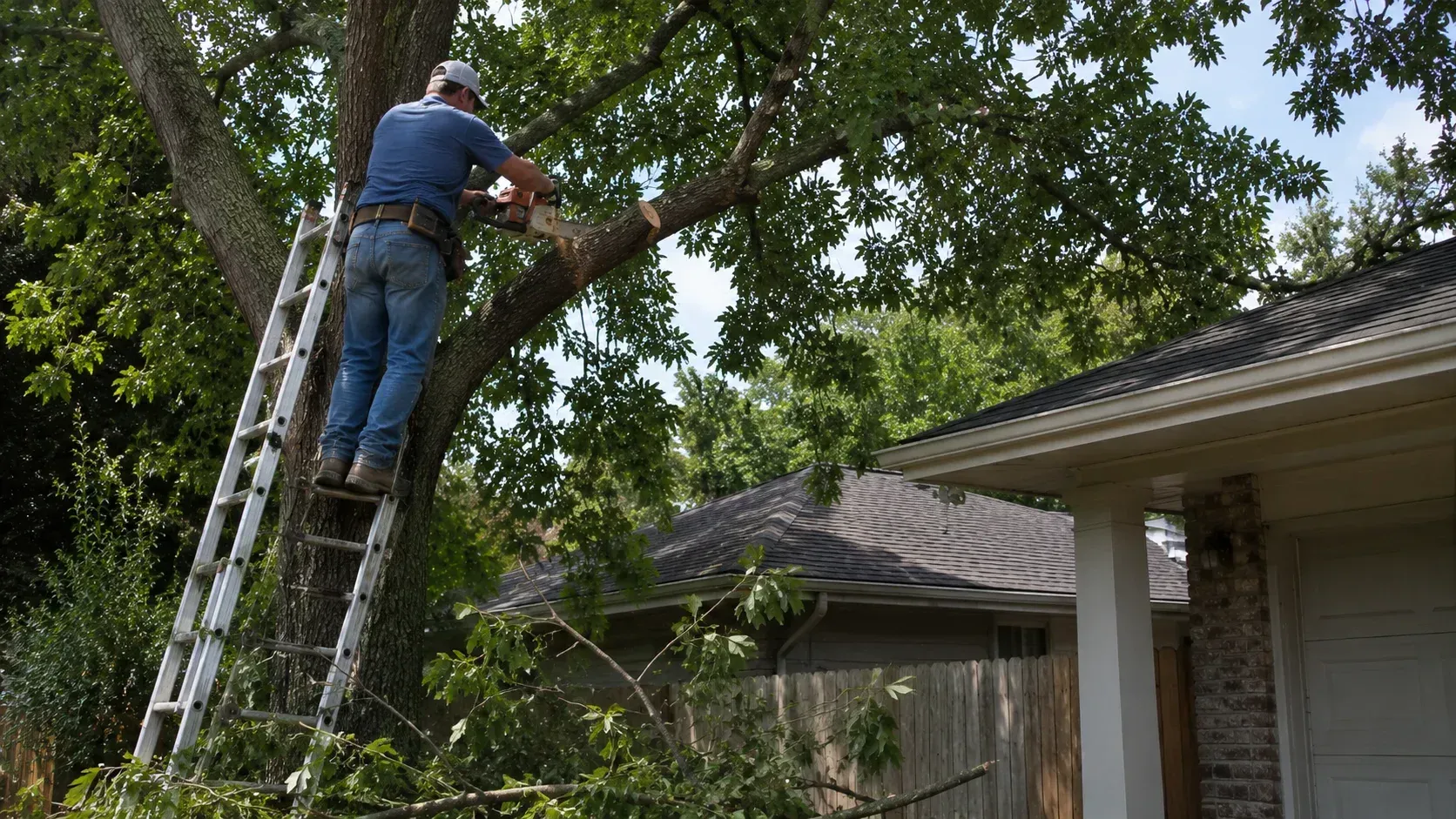
Table of Contents
- Introduction
- The Short Answer: It Depends on the Tree
- What Counts as a Safe DIY Trim
- The Main Risks of DIY Trimming on Large Trees
- Why Falling Limbs Are More Dangerous Than They Look
- How Bad Cuts Hurt the Tree
- Corpus Christi Conditions That Raise the Stakes
- When to Call a Professional
- Conclusion
- Book a Discovery Call
- Frequently Asked Questions
Key Takeaways
- DIY tree trimming is reasonable for small branches you can reach from the ground, but large trees carry serious risks that make professional help the safer option.
- The main hazards are falls from height, chainsaw injuries, unpredictable falling limbs, and contact with power lines.
- Heavy limbs do not fall straight down. They swing, bounce, and can pin or strike a person, which is a leading cause of home tree-work injuries.
- Poor cuts can also damage the tree itself, leaving it weaker and more likely to fail in a storm.
- Any work near power lines, requiring a ladder or climbing, or involving large limbs over a structure is best left to a trained crew.
Introduction
DIY tree trimming is generally safe for small branches you can reach while standing on the ground, but it is not safe for large trees that require a ladder, climbing, or a chainsaw overhead. Once the work involves height, heavy limbs, or anything near a power line, the risk climbs fast, which is why professional tree trimming is the safer choice for mature trees in Corpus Christi.
This matters because tree work is one of the more dangerous jobs a homeowner can take on, and the injuries tend to be severe rather than minor. A lot of people underestimate a big tree because trimming looks simple from the sidewalk. This guide walks through what makes large-tree trimming risky, where the line sits between a safe DIY job and one worth handing off, and what local conditions add to the equation.
The Short Answer: It Depends on the Tree
Not all trimming is equally dangerous, and the honest answer is that size and location decide almost everything.
A few small, low branches on a young tree are a normal weekend task. A mature live oak with limbs 20 feet up, hanging over a roof, is a different job that involves height, weight, and equipment most homeowners are not set up to handle safely.
The useful question is not "can I trim a tree," but "can I do this specific cut with both feet on the ground and no chainsaw over my head." If the answer is no, the risk profile changes completely.
What Counts as a Safe DIY Trim
There is real DIY territory here, and it covers more than people think. You can usually handle the following yourself with hand tools and reasonable care:
- Low branches within reach from the ground, using hand pruners, loppers, or a pole pruner.
- Small deadwood on young or medium trees, again from the ground.
- Light shaping of shrubs and small ornamental trees.
- Suckers and water sprouts growing from the base or lower trunk.
The common thread is that your feet stay on the ground and the branches are small enough to control by hand. A good rule many arborists share: if you need to leave the ground or use a chainsaw above shoulder height, it is time to reconsider.
Even for ground-level work, a few basics help. Wear eye protection and gloves, keep bystanders and pets clear of the drop zone, and check what is above you before you cut. Sharp, clean tools make cleaner cuts and slip less than dull ones.
The Main Risks of DIY Trimming on Large Trees
Large-tree work concentrates several serious hazards into one job. Each one is dangerous on its own, and they often stack together.
Falls From Height
Falls are the leading cause of serious tree-work injuries for homeowners. Ladders are unstable against a round, moving trunk, and the moment you use one hand for a saw, you no longer have a safe grip. A fall from even 10 feet can cause lasting injury.
Chainsaw Injuries
A chainsaw is hard enough to control on the ground. Running one overhead, on a ladder, or one-handed multiplies the danger. Kickback, where the bar jerks back toward the user, happens fast and is a common cause of severe cuts.
Power Line Contact
Many Corpus Christi trees grow into or near overhead lines. Contact with a live line, directly or through a branch or metal ladder, can be fatal. This is line-clearance work, and it belongs to the utility or a specially trained crew, never a homeowner.
Being Struck by Limbs
A cut limb does not behave predictably. It can swing, roll, kick back off the trunk, or drop faster than expected, striking the person cutting or someone standing below.
Why Falling Limbs Are More Dangerous Than They Look
This deserves its own section, because it is the hazard people most often misjudge. A large limb weighs far more than it appears from the ground, sometimes hundreds of pounds, and cut wood moves in ways that surprise even experienced people.
A limb still attached at one point can swing like a pendulum toward the trunk, and the person on the ladder is standing right there. A limb dropped onto the ground can bounce or roll. A partially cut limb can split and "barber chair," tearing back along the trunk with tremendous force.
Professional crews manage this with rigging, ropes, and controlled lowering, so heavy pieces come down where they intend. Without that gear, a homeowner is relying on gravity and luck, which is exactly where big trees cause the worst injuries.
How Bad Cuts Hurt the Tree
Safety is not only about the person. Poor trimming damages the tree, and the effects show up later.
Cutting a branch flush against the trunk removes the branch collar, the swollen area the tree uses to seal the wound. A flush cut heals slowly and opens the tree to decay and pests. Cutting too far out leaves a stub that dies back and invites rot.
Topping, cutting large limbs back to stubs to reduce height, is one of the most harmful things you can do to a mature tree. It forces weak regrowth, stresses the tree, and often creates the very hazard the owner was trying to avoid. The new shoots that sprout after topping attach poorly and tend to break off, so a topped tree can end up dropping limbs for years.
A tree weakened by bad cuts is more likely to fail in the next storm, which can turn a trimming shortcut into a future tree removal. Good pruning also limits how much you take at once. Removing more than about a quarter of a mature tree's canopy in a single season stresses it, and that restraint is easy to overlook when you are already up there working.
Corpus Christi Conditions That Raise the Stakes
Local factors add a few wrinkles worth keeping in mind before climbing into a tree here.
Live oaks, common across the city, have dense, heavy wood and wide-spreading limbs that weigh more than softer species of the same size. That weight makes both falling and rigging harder to manage.
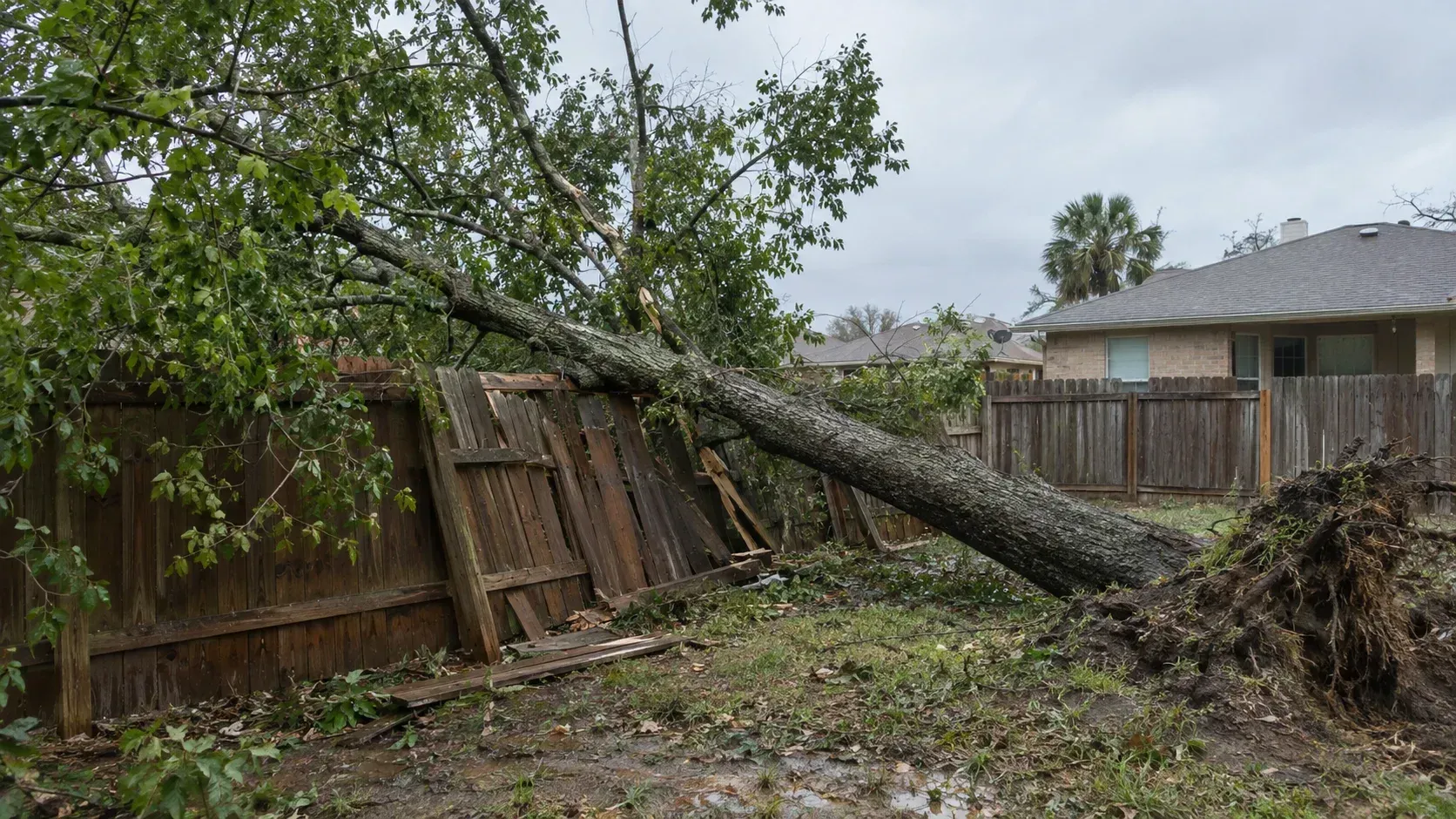
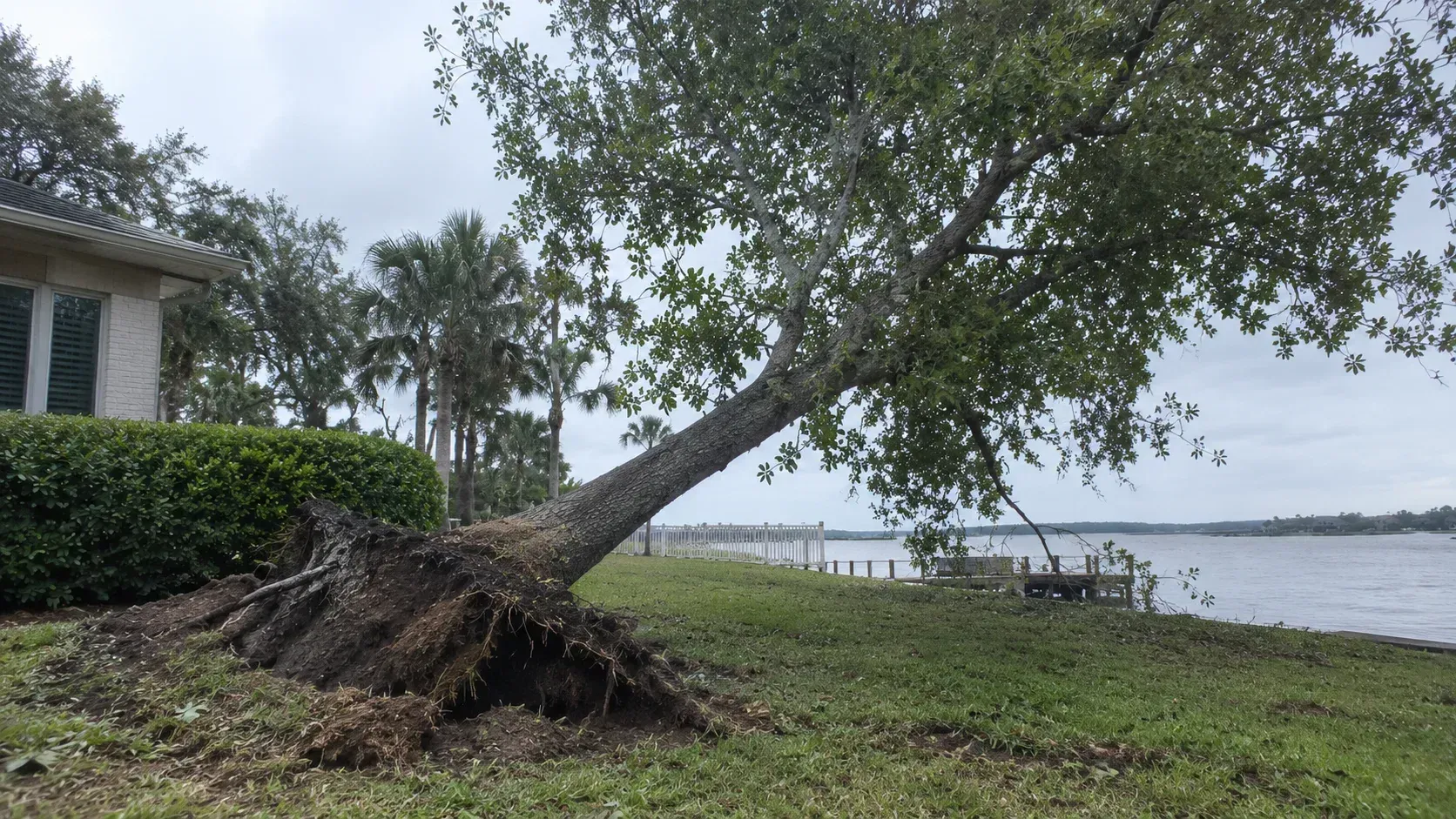
The Gulf climate also means storm damage is a frequent reason for trimming, and storm-damaged limbs are already under tension. A limb that is cracked, hanging, or bent is far more unpredictable to cut than a sound one, and post-storm cleanup is a common setting for serious injuries.
Heat is its own factor. Working at height in South Texas summer humidity brings fatigue and heat stress on quickly, and tired people on ladders make mistakes.
When to Call a Professional
There are clear signals that a job has moved beyond DIY. Consider hiring a trained crew when any of these apply:
- The work requires a ladder or climbing to reach.
- You would be running a chainsaw above shoulder height.
- The tree or any limb is near a power line.
- Large limbs hang over a house, fence, vehicle, or walkway.
- The tree is storm-damaged, leaning, or has limbs under tension.
- You do not have the right protective gear or a helper on the ground.
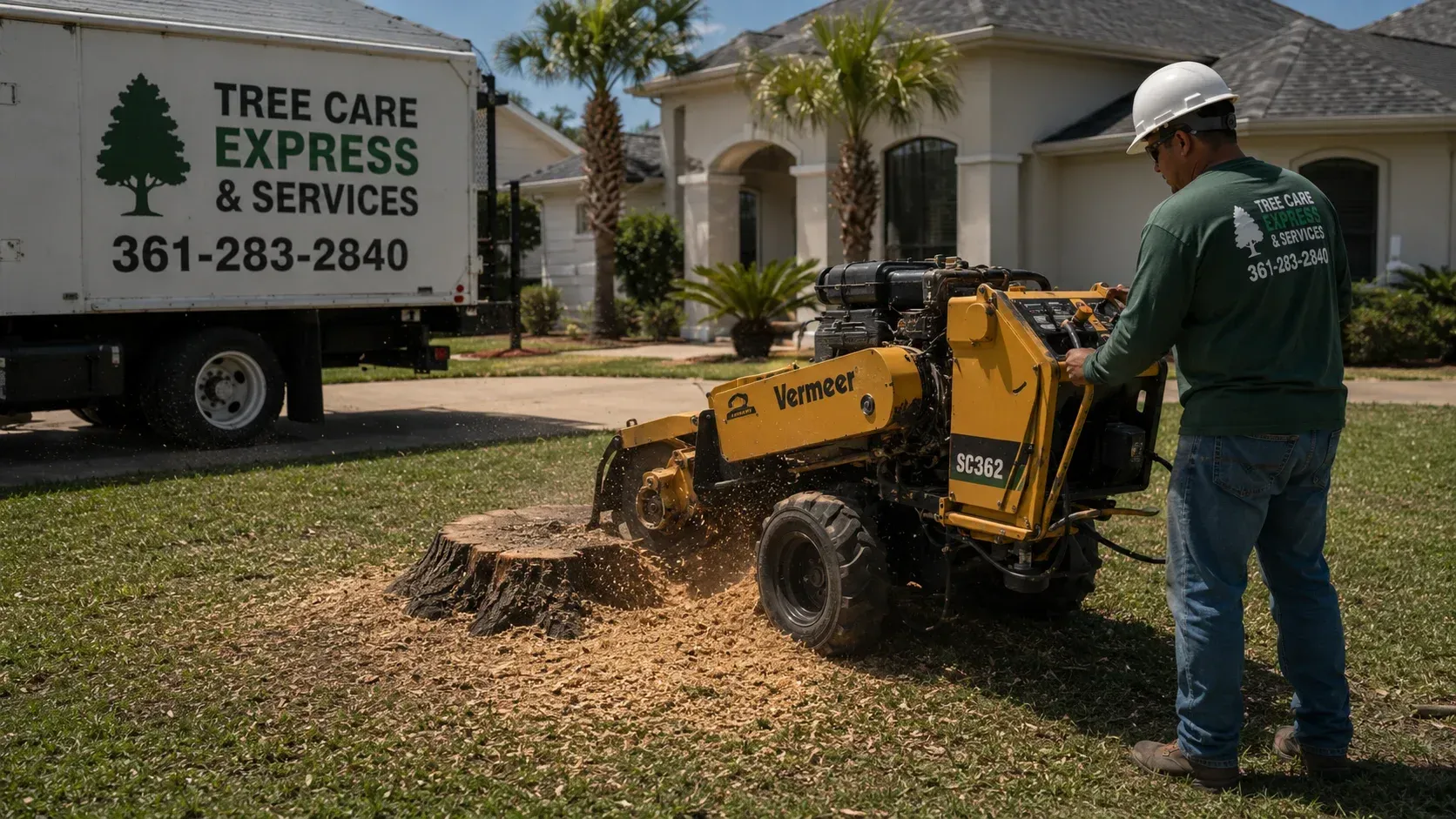
A professional crew brings climbing systems, rigging, and the experience to read how a tree will react to a cut. They also carry insurance, which matters if something goes wrong. When the trimming ties into other work like stump cleanup, a company that also handles stump grinding can address the whole project in one visit.
Conclusion
DIY tree trimming is safe within limits: small branches, ground-level work, hand tools, and no power lines nearby. Beyond that, large trees introduce falls, chainsaw hazards, unpredictable heavy limbs, and power line risk, and those are the situations that produce the most serious injuries.
Bad cuts also hurt the tree, sometimes setting up a bigger problem down the road. Corpus Christi's dense live oaks, storm-damaged limbs, and summer heat all add to the challenge. The sensible approach is to handle the small stuff yourself and bring in a trained, insured crew once a job involves height, heavy wood, or power lines. Judging that line honestly is the most important safety decision a homeowner makes.
Book a Discovery Call
If you are looking at a large tree and are not sure whether it is a job you should take on, a short conversation can help you decide. Tree Care Express Services works with mature trees across Corpus Christi and the surrounding Coastal Bend, and can assess a tree's size, condition, and placement before recommending anything. There is no pressure to book work. The goal is to give you a clear, honest read so you can weigh your options safely. You can reach the team through the contact page or by calling (361) 283-2840, Monday through Friday.
Frequently Asked Questions
Trimming small branches you can reach from the ground is generally safe. Large trees that require a ladder, climbing, or a chainsaw overhead carry serious risks, including falls and being struck by heavy limbs, and are safer to leave to a trained crew.
Falls from height cause the most serious homeowner injuries, followed by chainsaw accidents and being struck by falling limbs. Contact with power lines, though less common, can be fatal and should always be handled by professionals.
A common guideline is to stay on the ground. If a cut requires you to leave the ground or run a chainsaw above shoulder height, it is generally beyond safe DIY range. A pole pruner extends your reach without a ladder, within limits.
No. Never trim near or around power lines. Even indirect contact through a branch or a metal ladder can be deadly. Report the situation to your utility company or hire a crew trained in line-clearance work.
Yes. Flush cuts, stub cuts, and topping all harm a tree by slowing healing, inviting decay, and forcing weak regrowth. Poor cuts can leave a tree more likely to fail in a storm, so technique matters as much as safety.
You are not required to, but tree work injuries and property damage can be costly, and homeowner policies vary in what they cover. Professional crews carry their own liability and worker coverage, which shifts that risk away from you.
Hire a professional when the work needs a ladder or climbing, involves large limbs over structures, is near power lines, uses a chainsaw overhead, or involves storm-damaged or leaning trees. Those conditions are where injuries and property damage most often occur.