What Happens If You Wait Until After Hurricane Season to Remove a Leaning Tree in Corpus Christi?
Contact Us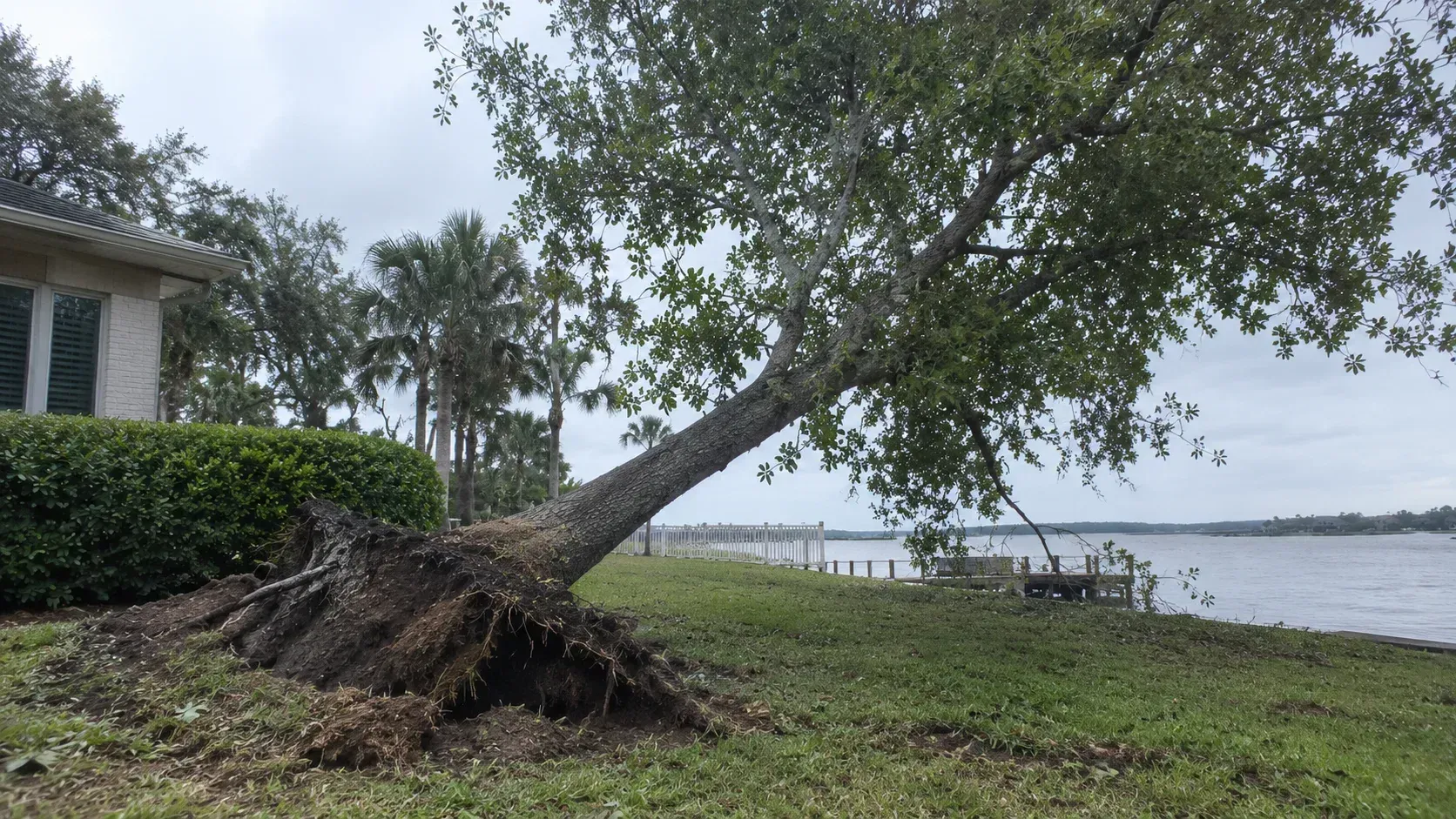
Table of Contents
- Introduction
- The Short Answer
- Why a Leaning Tree Is a Hurricane Season Risk, Not a Cosmetic Problem
- What Makes a Tree Lean in the First Place
- When to Remove a Leaning Tree, and When It Can Wait
- How We Assess a Leaning Tree in Corpus Christi
- What Changes Between Now and Next Season
- Why Storm Season Tree Hazard Work Gets Harder After a Storm, Not Easier
- What You Can Do This Week
- When a Lean Genuinely Is Not a Problem
- Conclusion
- Have a Leaning Tree? Schedule an Inspection This Season
- Frequently Asked Questions
Key Takeaways
- Atlantic hurricane season runs June 1 through November 30. Waiting until it ends means leaving a compromised tree standing through the exact months it is least able to withstand wind.
- A lean that appeared recently matters far more than a lean the tree has had for years. Sudden lean usually means root failure, and roots do not heal.
- The soil is the variable most people miss. Saturated coastal soil holds roots far less firmly, so the same tree that stood through a dry summer can fail in a wet October.
- After a storm, removal gets slower and harder for everyone at once. Crews are booked, access is blocked, and a tree that has already fallen costs more to deal with than one that has not.
- Not every lean is dangerous. The distinction is whether the root plate is stable, and that is something we check on site rather than guess from the curb.
Introduction
We get this call every September and October. A homeowner has watched a tree lean toward the house or the fence all summer, has decided it needs to come out, and wants to know whether it can wait until the weather calms down. It is a reasonable instinct. Storm season feels like the wrong time to have a crew in the yard.
The honest answer is that waiting is backwards. Leaving a leaning tree until after hurricane season means it spends the highest wind-loading months of the year standing there with a root system that is already compromised, which raises the chance it fails during the season you were trying to get through. Our tree removal work is busiest in the weeks right after a storm, and many of those calls are trees somebody had already decided to remove.
Below is what a lean actually tells us, how we tell a stable lean from a failing one, and what changes for the worse if the decision gets pushed to December.
The Short Answer
A leaning tree is a structural problem that gets worse with wind and rain, and hurricane season is the wettest, windiest stretch of the year on the Texas coast. Removing the tree during that window takes the risk off the table. Waiting until after leaves it in place through the entire period the risk is highest.
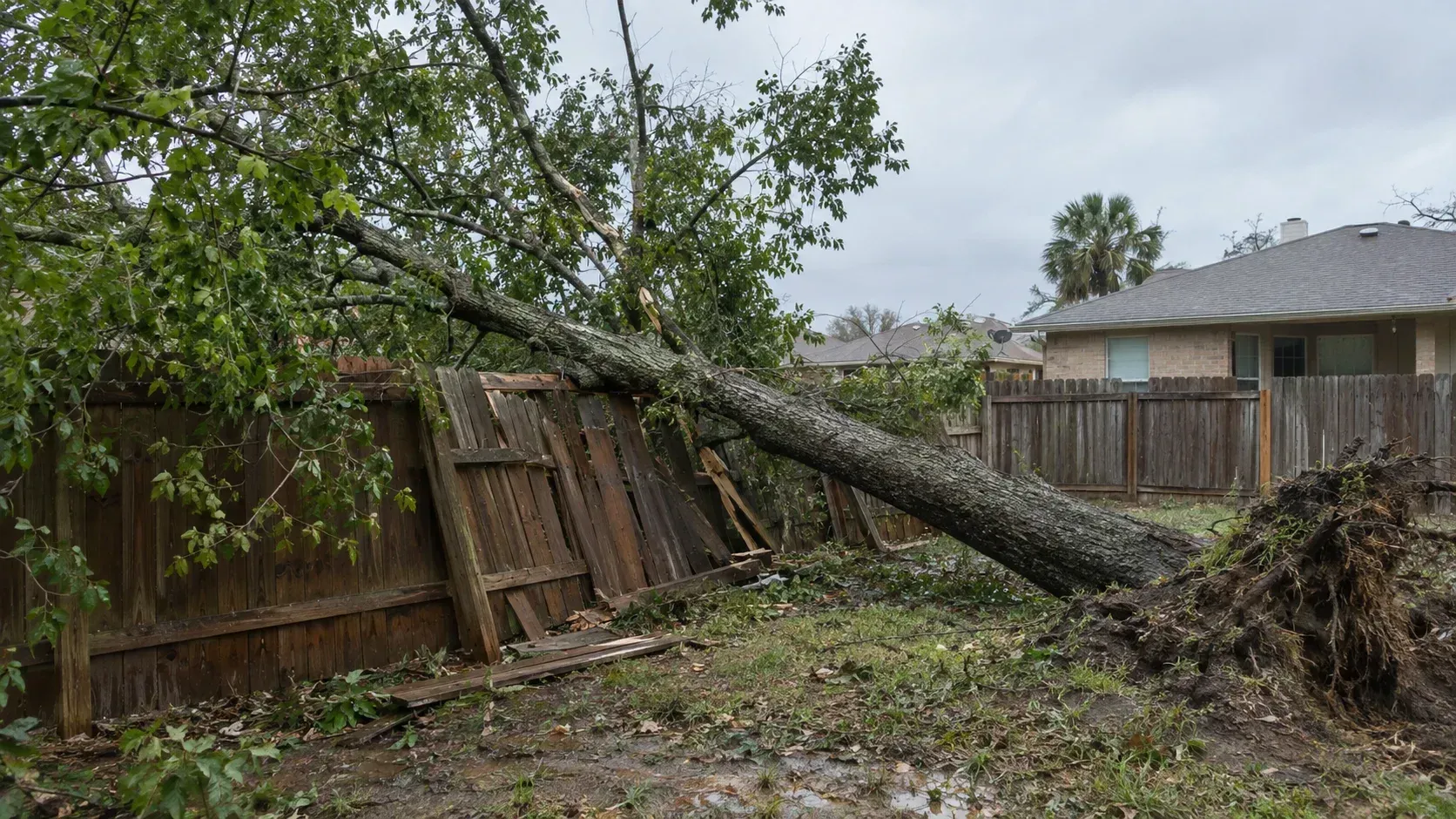
There is also a practical dimension. A tree removed on a scheduled visit is a straightforward job. The same tree removed after it has come down across a fence or a roof is slower, costlier and more disruptive, and it may now involve an insurance claim that did not need to exist.
Why a Leaning Tree Is a Hurricane Season Risk, Not a Cosmetic Problem
A healthy tree resists wind as a system. The roots anchor it, the trunk flexes and transfers load into those roots, and the canopy sheds some of the wind's force by moving. When a tree leans because part of that system has already given way, every other part works at a disadvantage.
Here is why the leaning tree hurricane season risk differs in kind from a tree that simply looks untidy:
- The load is no longer centered. A vertical trunk spreads wind force evenly around the root plate. A leaning trunk concentrates it on the low-side roots, usually the ones already stressed.
- Gravity works against the tree full time. An upright tree only fights wind when the wind blows. A leaning tree carries a constant sideways pull, so it is fatigued before the storm arrives.
- Wind direction matters more. A tree leaning toward your house needs only a wind from the right quarter, and a tropical system delivers wind from most directions as it passes.
- Wet soil reduces the anchor. This is the big one on the coast. Saturated ground grips roots far less firmly, and the heavy rain arrives with the same storm as the wind.
- The canopy becomes a sail, adding leverage in the direction the tree is already going.
That combination is why we treat sudden lean as a priority rather than a maintenance item. Severe leaning, hollow trunks, large dead branches and storm damage are all signs that removal may be the safer option.
What Makes a Tree Lean in the First Place
Not all leans mean the same thing, and the cause tells us most of what we need to know:
- Phototropic lean. The tree grew toward light over many years, usually away from a building or a taller tree. The trunk is often curved rather than straight, and the roots grew to match. This is the least alarming kind.
- Wind-trained lean. Years of prevailing coastal wind pushed the tree into a permanent tilt. Again, the roots adapted as it happened.
- Root plate failure. Roots on one side broke, rotted or lost their grip. This is the dangerous one, and it is usually recent.
- Soil movement. Erosion, a nearby excavation, a failed retaining wall or a saturated slope moved the ground the tree stands in.
- Root severance. Trenching for utilities, a driveway pour or a foundation repair cut anchoring roots on one side, sometimes years before the lean appeared.
- Trunk or basal decay. The wood at the base can no longer hold the tree straight, which often means the trunk looks fine outside while being hollow inside.
The first two are conditions the tree has already adapted to. The last four are active failures. Telling them apart is the whole job, and nobody can do it reliably from a photo.
When to Remove a Leaning Tree, and When It Can Wait
These are the signs that move a tree from "watch it" to "deal with it now." When we are deciding when to remove a leaning tree, we are looking for:
- Soil heaving or cracking on the side opposite the lean. A raised ridge or a crescent-shaped crack in the ground means the root plate is lifting. This is the single clearest warning sign there is.
- Exposed or torn roots on the high side, or roots that have obviously pulled out of the ground.
- A lean that changed recently. If it moved this year, something failed this year.
- A gap between the trunk base and the soil, or soil pulling away on the low side.
- Fresh cracks in the trunk, especially vertical splits or cracks that open at the base.
- Mushrooms or fungal growth at the base or on exposed roots, pointing to decay in the anchoring wood.
- A hollow sound when the lower trunk is struck, or visible cavities.
- The lean points at something that matters. A tree over open lawn is a different decision from the same tree over a bedroom, a driveway or a neighbor's property.
Any one of the first four is reason to have the tree looked at before the next system. Several together generally means it should come out.
How We Assess a Leaning Tree in Corpus Christi
A leaning tree in Corpus Christi sits in a specific set of conditions, and we account for all of them. We serve coastal environments where strong winds and storms can affect tree stability, and the climate, soil and coastal challenges here are genuinely different from inland Texas.
When we come out, we work through the following:
- The ground before the tree. We look at the soil around the base for heaving, cracking, separation and erosion, because the root plate tells the truth faster than the canopy does.
- The root collar. We check where the trunk meets the soil for decay, cavities, fungal bodies and torn roots.
- The trunk. We look for cracks, cavities, included bark at unions, and sound the lower trunk for hollowness.
- The canopy. Deadwood, thinning, one-sided growth and the sheer sail area the tree presents to wind.
- The target. What the tree would hit, and how far it could reach. This changes the urgency more than anything else.
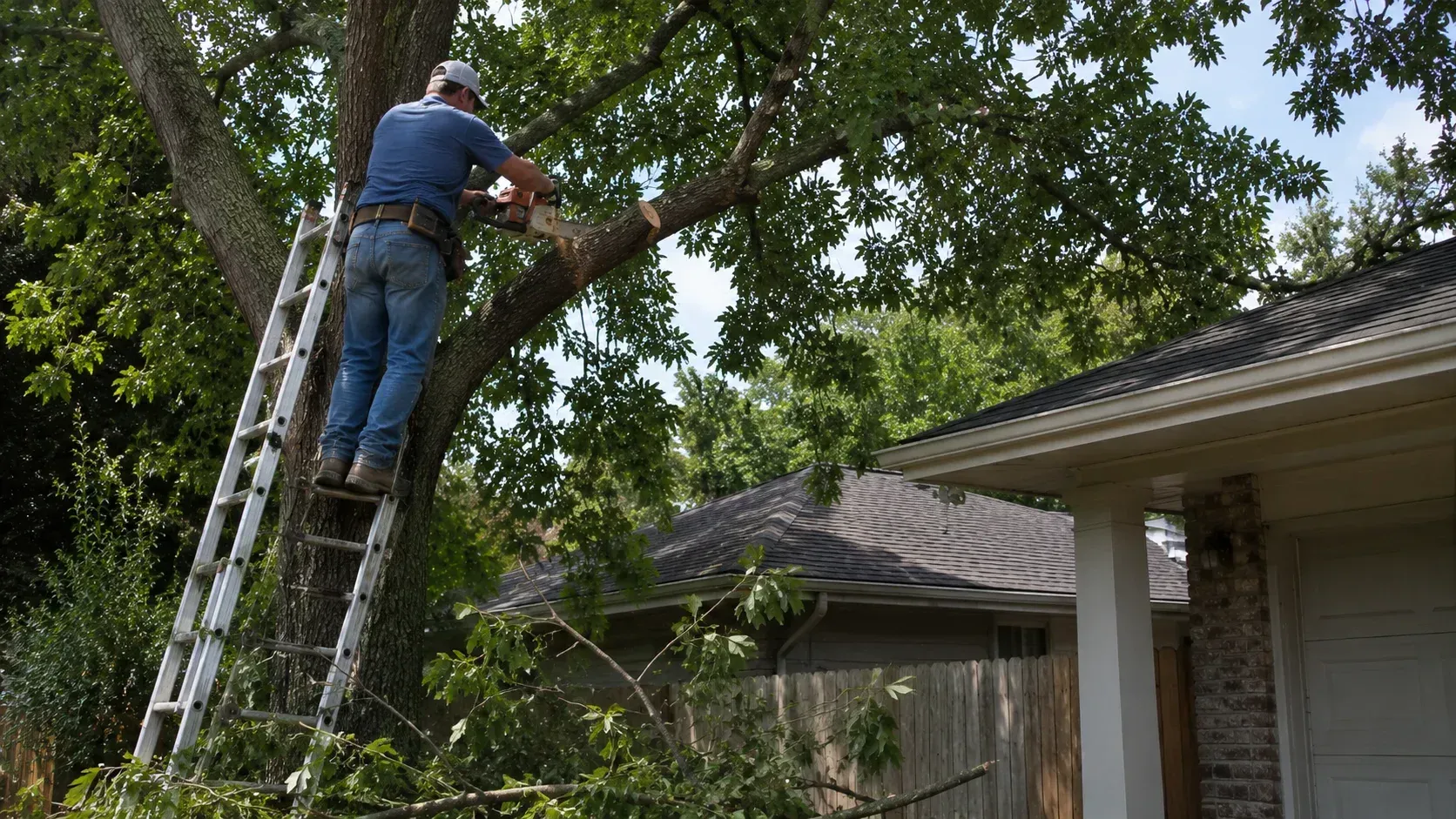
- Access and method. Whether removal calls for a bucket truck or climbing, what species we are dealing with, and what needs protecting on the way out.
Then we give you a straight answer and a free estimate, including when the answer is that the tree is fine.
What Changes Between Now and Next Season
If a leaning tree stays where it is until December, several things will have changed, and none of them in your favor:
- Cumulative wind loading. Every storm works the root plate a little further. Trees that survive a season are often less stable afterward, not more.
- Rain saturation cycles. Repeated wetting and drying of already-loose soil around a failing root plate loosens it further.
- Decay progression. If fungal decay is part of why the tree leans, it does not pause for the season. It advances all year, fastest in warm, wet conditions.
- The failure becomes someone else's problem too. A tree that falls across a property line turns a maintenance decision into a liability conversation.
The delay tree removal risk is not that something dramatic happens the day you decide to wait. It is that a slow structural failure keeps moving while the weather that exploits it arrives repeatedly.
Why Storm Season Tree Hazard Work Gets Harder After a Storm, Not Easier
This surprises people, and it is worth saying plainly because it affects the plan.
After a significant storm, storm season tree hazard work changes character completely. Every crew in the region is working emergency calls at once, and trees that have already fallen on houses and blocked driveways come first, as they should. A tree that is still standing goes to the back of that queue.
The job itself also gets harder. Access routes may be blocked. Ground that was firm is now soft, which matters when equipment has to get near the tree. A partially failed tree is under tension, which makes it more dangerous and slower to take down safely than one standing under its own weight. And if it came down on a structure, removal now has to be coordinated around an adjuster and possibly a contractor.
We offer both scheduled and emergency tree removal, and we would rather do yours as the first kind. A scheduled removal is a planned visit with the right equipment and a clear yard. An emergency removal is us solving a problem that has already happened.
What You Can Do This Week
If you have a tree you are unsure about, these steps cost nothing and take very little time:
- Photograph the lean from the same spot, dated. Your phone timestamps images, and two photos a few weeks apart are the easiest way to know whether a lean is moving.
- Walk the base and look at the soil for heaving, cracks, separation and exposed roots. You do not need to be an expert to spot a raised ridge of soil.
- Map the fall zone honestly, including the neighbor's side, and keep vehicles and play equipment out of it.
- Do not prune or brace it yourself. Removing canopy weight from a leaning tree changes its balance unpredictably, and working under a compromised tree is how people get hurt.
- Get it looked at before the next system. The estimate is free, and the answer may well be that it can stay.
Homeowners across our service area face this every year, and the ones who come out best asked in September rather than the week after a storm.
When a Lean Genuinely Is Not a Problem
We are not going to tell you every leaning tree needs to come down, because that is not true and you would be right to distrust it.
Plenty of trees on the coast have leaned for decades and are perfectly sound. The signs of a stable lean are consistent: the lean is long-standing and unchanged, the trunk is curved rather than straight (which shows the tree grew that way rather than tipped), the soil at the base is undisturbed, the root collar is sound with no decay or fungal growth, and nothing valuable sits in the fall zone.
That is a tree we would leave alone, and we will tell you so. Sometimes the right answer is selective trimming to reduce sail area rather than removal, which is a smaller job. Routine trimming removes weak or overgrown branches that may break during strong winds, helping reduce potential damage to nearby structures.
Conclusion
Waiting out hurricane season to remove a leaning tree gets the timing backwards. The season is not a stretch of elevated risk you can shelter a tree through. It is the period when a compromised tree is most likely to fail, because wind and saturated soil arrive together and repeatedly.
The decision comes down to whether the root plate is stable. A long-standing lean with undisturbed soil is usually fine. A lean that changed this year, with cracked or heaving soil at the base, is a tree we want to look at before the next system. That distinction is worth twenty minutes and a free estimate, and it is a better use of both than a claim in November.
Have a Leaning Tree? Schedule an Inspection This Season
If a tree on your property is leaning toward your house, your fence, a driveway or your neighbor's yard, get it looked at before the next storm rather than after it. We provide free estimates, and we will tell you honestly if the tree is sound and can stay where it is.
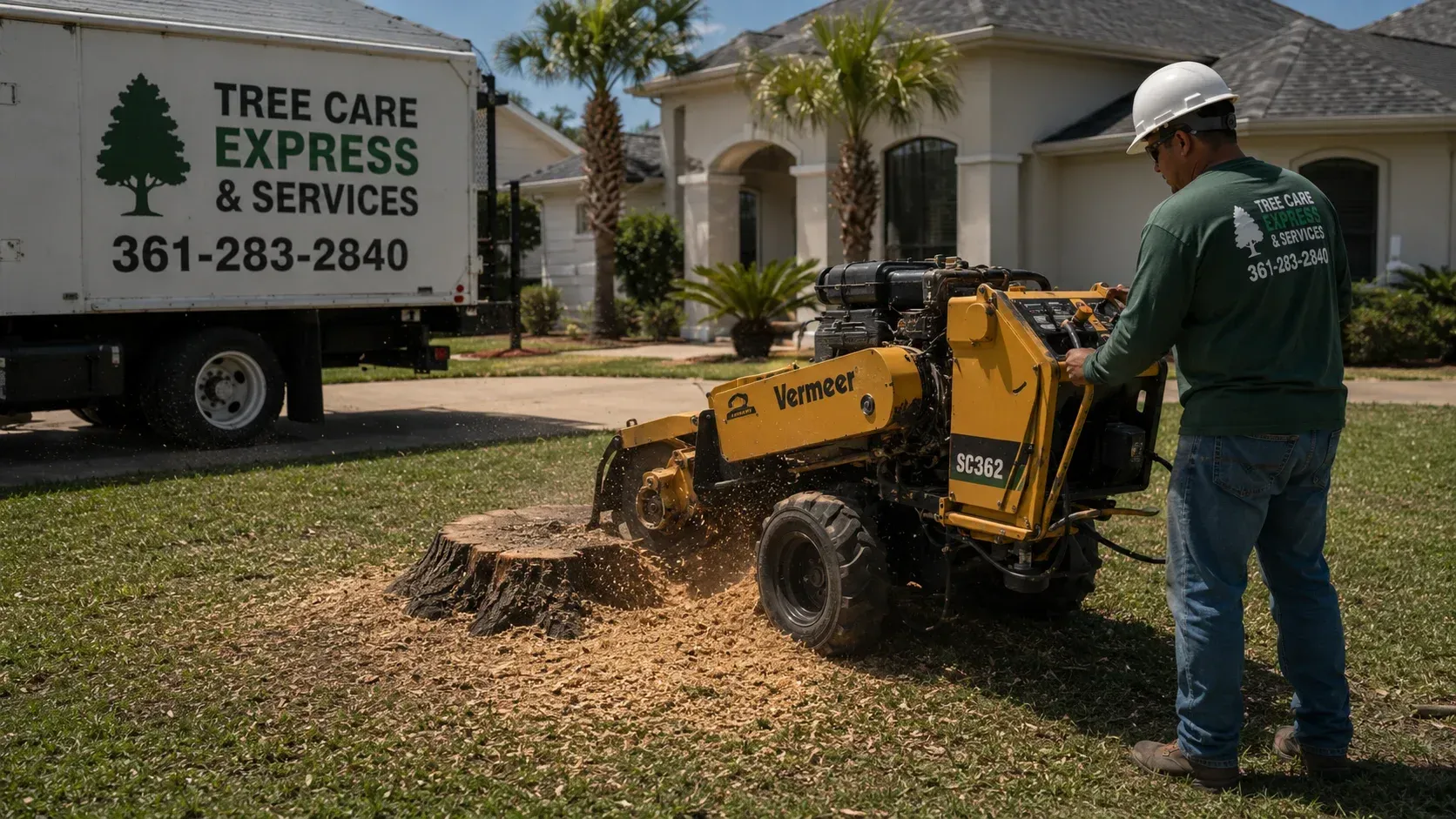
We handle both scheduled and emergency tree removal across Corpus Christi, Portland, Ingleside, Aransas Pass, Robstown, Taft and Gregory, using a bucket truck or climbing methods depending on what the tree and the site call for. If the tree does come out, we offer stump grinding as part of a complete removal, and we can chop the wood up and leave it for firewood if you want it.
Call (361) 283-2840 or reach us through the
contact page to get on the schedule.
Frequently Asked Questions
How much does a tree have to lean before it becomes dangerous?
There is no safe angle. A slight lean that appeared this year with cracked soil at the base is more urgent than a pronounced lean the tree has had for thirty years. What matters is whether the root plate is stable, not how many degrees off vertical the trunk sits.
Can a leaning tree be straightened or braced instead of removed?
Cabling and bracing can sometimes support a structurally sound tree, but they do not fix root failure. If the tree is leaning because roots broke or rotted, no amount of support above ground addresses the actual problem, and removal is usually the safer answer.
Is it safe to have a tree removed during hurricane season?
Yes. Removal happens on a clear day, not during a storm. Scheduling it during the season is safer than leaving a compromised tree standing through it, and it means the work is done before crews are stretched by emergency calls.
Will my insurance cover removing a leaning tree before it falls?
Generally no. Homeowners policies typically respond to damage that has already happened rather than preventive removal of a hazard. That is one reason acting early is usually the cheaper path. Confirm the specifics with your own carrier.
What if the leaning tree is on my neighbor's property?
Talk to your neighbor first and document the hazard with dated photos. Liability for a tree failure often depends on whether the owner knew or should have known the tree was dangerous, so a written, dated notice matters. For anything contested, get legal advice.