Does Homeowners Insurance Cover a Tree That Falls on a Fence During a Storm in Texas?
Contact Us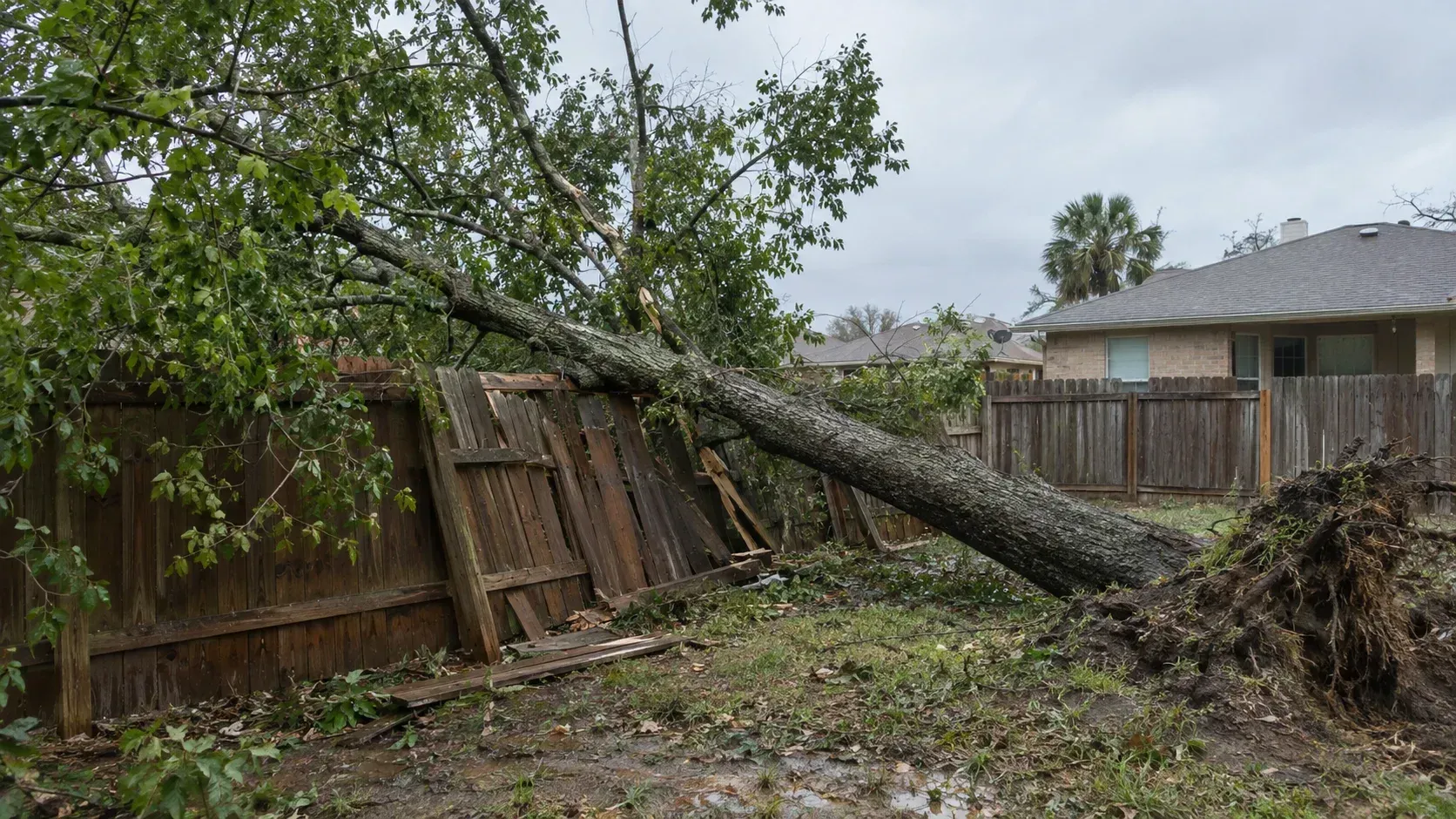
Table of Contents
- Introduction
- The Short Answer
- Why a Fence Is Covered Differently From Your House
- Does Homeowners Insurance Pay to Remove the Tree, or Only Fix the Fence?
- What the Cause of the Fall Changes About Your Claim
- Whose Tree Was It, and Does That Matter?
- What Documentation Your Adjuster Will Actually Want
- Where a Storm Damage Fence Insurance Claim in Texas Usually Goes Wrong
- What We Provide for an Insurance Claim Fallen Tree Fence Estimate
- When Filing Is Not Worth It
- Conclusion
- Filing an Insurance Claim for Storm Damage?
- Frequently Asked Questions
Key Takeaways
- Fence damage from a storm-felled tree is usually covered, but under "other structures" coverage rather than your dwelling coverage, which has its own limit.
- Fixing the fence and removing the tree are two separate coverage questions. Many policies cap tree removal at a modest amount, and some only pay for removal if the tree damaged a covered structure.
- Fences are commonly settled on actual cash value rather than replacement cost, which means depreciation comes off the payout.
- Whose tree it was matters less than most people expect. A storm is generally treated as an act of nature, so your own policy usually handles your fence regardless of which side the tree grew on.
- Photograph everything before you move anything, and get a written, itemized estimate that separates removal from repair. Adjusters pay from documentation, not from descriptions.
Introduction
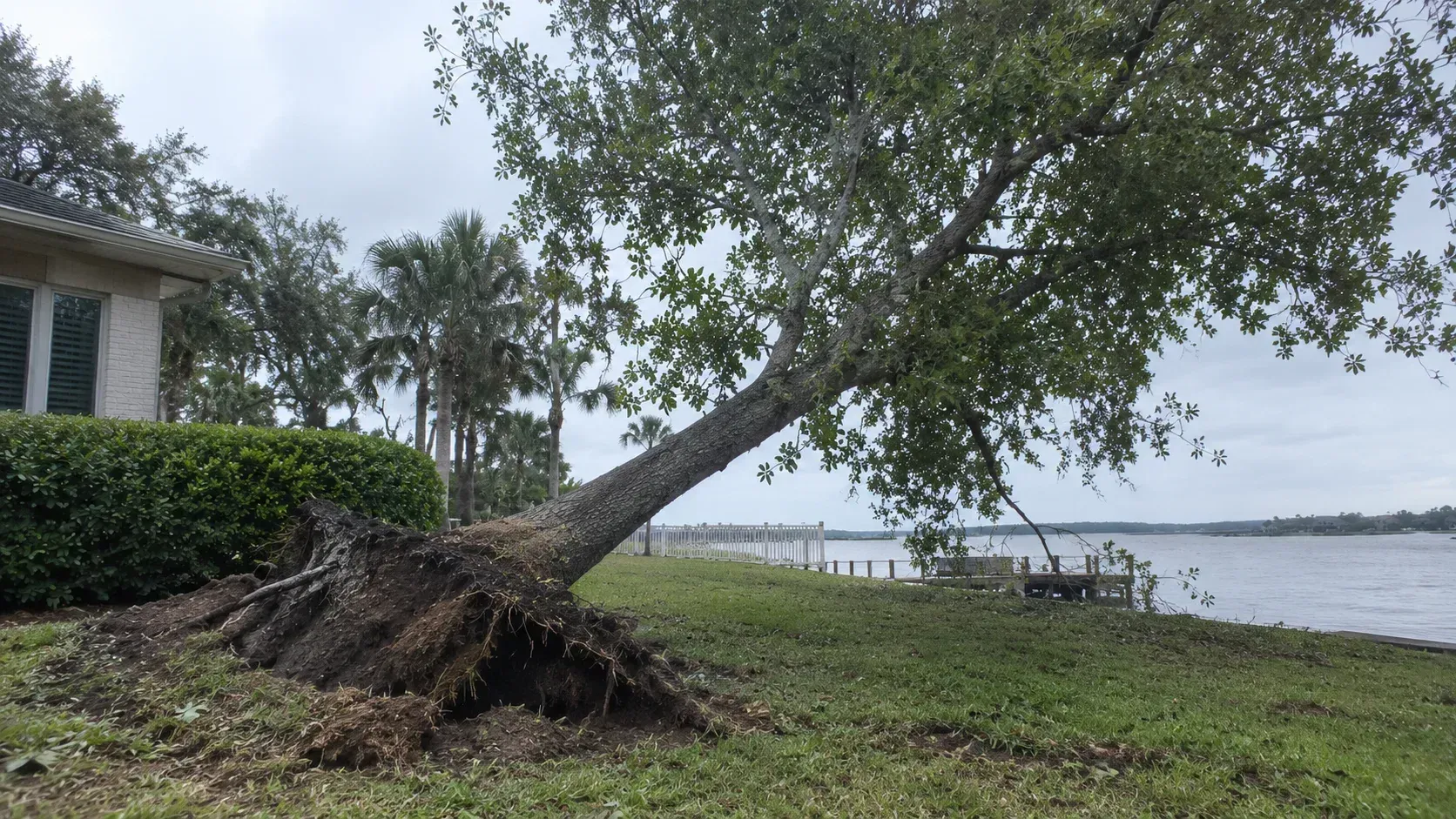
In Texas, homeowners insurance often does cover a tree that falls on your fence during a storm, because most policies insure a fence as an "other structure" and treat storm wind as a covered peril.
The morning after a storm we get a lot of calls that start the same way: a tree is lying across the back fence, the homeowner has already phoned their insurance company, and the adjuster has asked for an estimate. Reasonable question follows. Is any of this actually covered?
In most cases, yes. A standard Texas homeowners policy generally covers fence damage from a storm-felled tree under its other structures coverage. Whether the policy also pays to haul the tree away is a separate question with a different answer, and that is where most of the confusion and most of the out-of-pocket cost lands. Our tree removal work puts us in a lot of yards during claims, and the pattern is consistent enough to be worth writing down.
To be clear about what follows: we are a tree care company, not an insurance company, and we cannot tell you what your specific policy says. What we can tell you is how these claims tend to work, what adjusters ask us for, and how to document the damage so that the parts that are covered actually get paid.
The Short Answer
If a storm knocks a tree onto your fence, the fence damage is generally covered under the other structures portion of a standard homeowners policy, subject to your deductible and that coverage's limit. Removing the fallen tree is treated separately, and policies often cap debris removal at a set dollar amount or only cover it when the tree struck a covered structure.
Two caveats decide most cases. First, the cause matters. Storm damage is usually covered, while a tree that fell because it was already dead and neglected may not be. Second, policy wording varies, so the only authoritative answer to "am I covered" is your own declarations page and your carrier.
Why a Fence Is Covered Differently From Your House
This catches people out constantly, so it is worth understanding before you call your carrier.
A homeowners policy separates what it insures into categories, and a fence is generally not part of your dwelling. It falls under other structures, sometimes called separate structures or appurtenant structures, along with detached garages, sheds, driveways and mailboxes. That coverage is typically set as a percentage of your dwelling coverage rather than as a figure you chose directly.
Three consequences follow:
- The limit is smaller than you think. Because other structures coverage is a fraction of your dwelling limit, and because it covers everything detached from your house, a long fence line plus a shed can approach that limit faster than expected.
- Your deductible still applies. A modest fence repair can land close to or below the deductible, which is the most common reason a fence claim is not worth filing.
- Depreciation often applies. Fences are frequently settled on actual cash value, meaning the payout reflects the fence's age and condition rather than what a new one costs. A fifteen-year-old wood fence may settle for considerably less than the replacement estimate.
Does Homeowners Insurance Pay to Remove the Tree, or Only Fix the Fence?
This is the single most useful thing we can tell you about these claims, because it is where homeowners get surprised by a bill.
Repairing the fence and removing the tree are two different coverages. Tree and debris removal is usually handled under a specific debris removal provision, and in our experience those provisions commonly work in one of these ways:
- Removal is covered, but capped. Many policies pay debris removal up to a stated dollar limit per occurrence, which can be a modest figure relative to what removing a large tree costs.
- Removal is covered only if the tree hit something insured. This is common. A tree that landed on your fence may qualify. The same tree, had it fallen harmlessly across the lawn, often would not.
- Removal of the part that matters only. Some policies pay to remove the portion of the tree lying on the structure and cutting it clear, not to grind the stump or haul away the entire trunk.
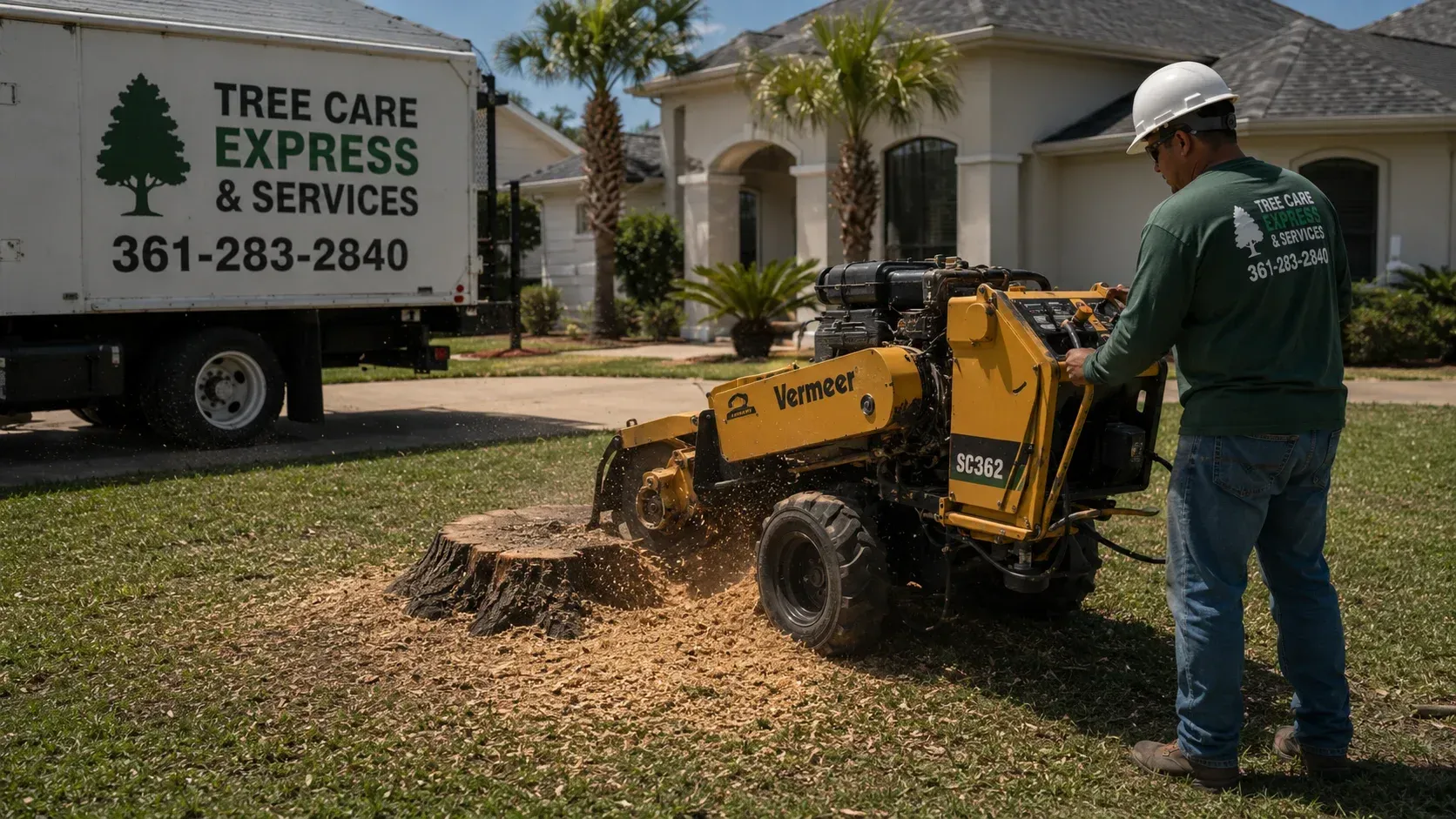
- Stump grinding excluded. The stump left behind is frequently treated as landscaping rather than debris, and landscaping coverage is its own limited category.
So the practical answer is that the fence repair and the removal are both usually covered to a degree, and the gap between the capped removal allowance and the actual removal cost is often what the homeowner pays. Knowing that before the crew arrives is better than learning it afterward.
What the Cause of the Fall Changes About Your Claim
Coverage generally turns on why the tree came down. In broad terms:
- Wind, storm or lightning. Generally a covered cause of loss. This is the straightforward case.
- Weight of ice or snow. Usually covered, though less often the issue on the Texas coast.
- A healthy tree in a storm. The clean claim. Nature did it, and the policy responds.
- A dead or visibly diseased tree. This is where carriers push back. If the tree was already dead and the owner knew or should have known it was hazardous, an insurer may argue the loss stems from neglected maintenance rather than the storm.
- Gradual causes. Root heave, settling, rot and slow deterioration are typically excluded as maintenance rather than sudden accidental loss.
- Flood. Flood damage is generally excluded from standard homeowners policies and requires separate flood coverage, which matters on the coast.
That fourth point is the reason we push so hard on dealing with obviously failing trees before a storm rather than after. A hazard you have documented and acted on is a very different conversation from a hazard your neighbor photographed last spring.
Whose Tree Was It, and Does That Matter?
Almost every homeowner asks us this, usually within the first minute of the call, and the answer is generally less dramatic than expected.
When a storm blows a neighbor's tree onto your fence, the loss is typically handled by your own policy. Storms are treated as acts of nature, and insurers generally do not chase a neighbor for damage the weather caused. Your carrier pays your covered loss, you pay your deductible, and that is usually the end of it.
Where it can change is when the tree was already dead or clearly hazardous and the owner had been made aware of it. In that situation there may be an argument that the owner was negligent, and your insurer may pursue the neighbor's carrier. That argument depends heavily on notice, documentation and the specific facts, and it is a question for an attorney or your carrier rather than for us.
Two practical points regardless of ownership. Take photographs before anything is moved, including the tree's base on the neighbor's side if you can see it. And if you have ever raised concerns about a neighbor's tree in writing, find that message, because dated notice is the evidence the whole negligence question turns on.
What Documentation Your Adjuster Will Actually Want
Having supplied a lot of these, here is what actually gets claims paid:
- Photographs before anything moves. Wide shots showing the tree, the fence and the house together for context, then close shots of the broken sections. Photograph the tree's base and root plate too.
- Photographs of the fence's pre-storm condition if you happen to have any. Old yard photos are surprisingly useful against a depreciation argument.
- A count of what is damaged. Number of fence panels or linear feet, post count, and gate damage listed separately.
- An itemized written estimate that separates removal from repair. This matters more than anything else on the list, because removal and repair draw on different coverages. A single lump sum invites the adjuster to apply the removal cap to the whole thing.
- The date and time of the storm, plus any local weather reporting for that event.
- Receipts for anything you paid to prevent further damage, such as temporary fencing to contain a dog.
- Your declarations page, so you know your other structures limit, your deductible and your debris removal allowance before you negotiate anything.
One warning worth repeating. Do not clear the debris before it has been documented and, where possible, before the adjuster has seen it or agreed you can proceed. Removing evidence weakens the claim, and if you dispose of the tree you may lose the ability to show what actually happened.
Where a Storm Damage Fence Insurance Claim in Texas Usually Goes Wrong
In our experience, most storm damage fence insurance problems in Texas are not coverage disputes at all. They are documentation and sequencing problems, and we see the same handful repeatedly:
- Debris cleared too early, leaving nothing to photograph and no way to prove the extent.
- A lump-sum estimate that mixes removal and repair, so the removal cap gets applied against the total.
- The stump forgotten. It is often not covered, and if nobody mentions it the homeowner discovers the cost later.
- Only the visible damage counted. Posts adjacent to the impact are frequently cracked or loosened without looking broken, and leaning posts on either side of the strike belong in the estimate.
- Filing below the deductible, which produces a claim on the record and no payment.
- Assuming the neighbor pays and delaying a claim on your own policy while notice deadlines run.
- No pre-storm photos, which leaves the depreciation calculation entirely to the adjuster.
What We Provide for an Insurance Claim Fallen Tree Fence Estimate
When you are filing an insurance claim for a fallen tree on a fence, this is what we can put in your hands:
- A written, itemized estimate that lists tree removal and debris haul-away separately from any fence work, so each cost lands against the right coverage
- Photographs taken during the work, including angles that are hard to get once the tree is cut up
- A plain description of the tree's condition and the failure, which is what an adjuster reads when deciding whether this was a storm loss or a neglected hazard
- Stump grinding priced as its own line item, since it is often treated separately or excluded
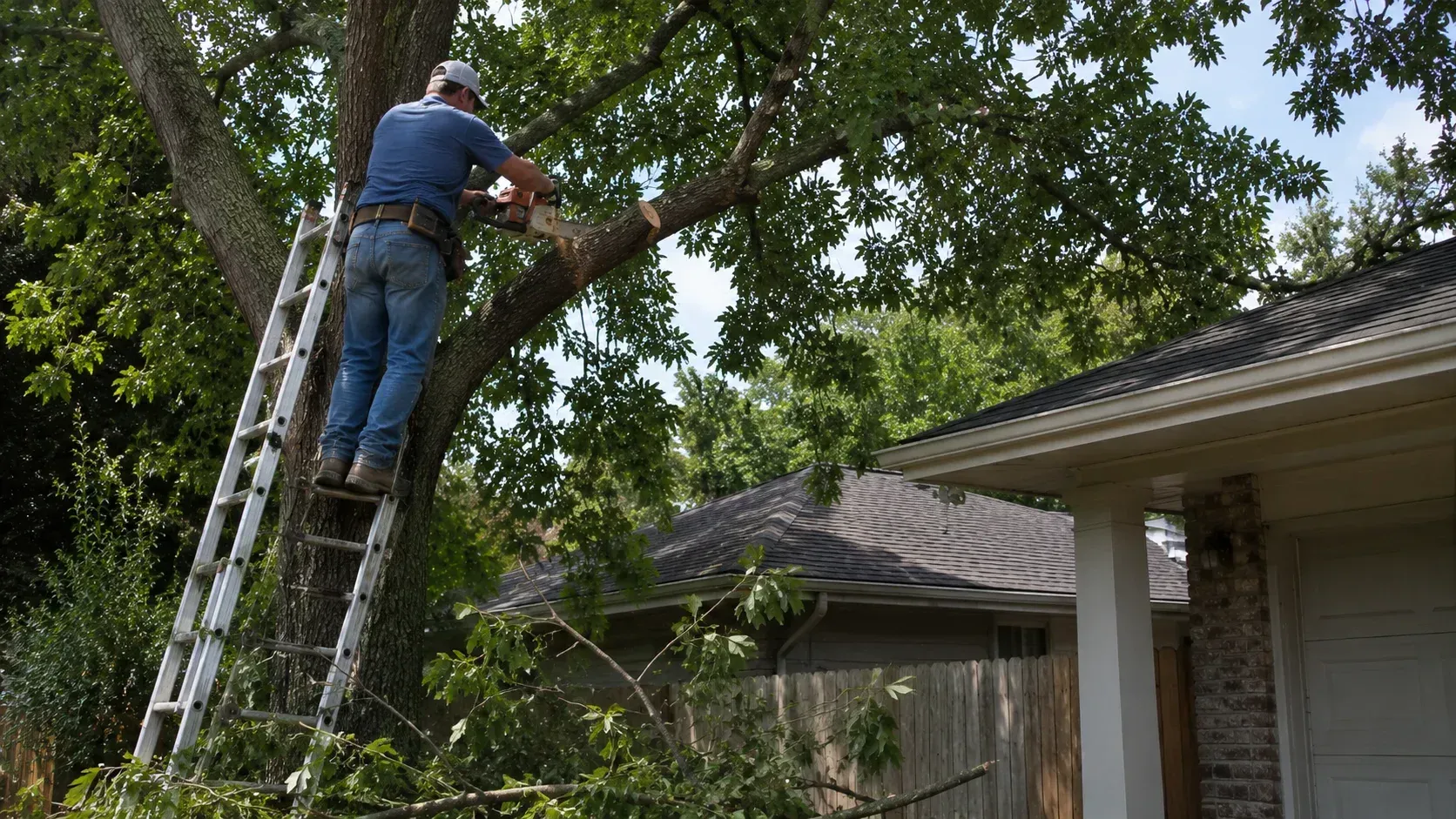
- Scheduled or emergency removal depending on how urgent the situation is, using a bucket truck or climbing methods as the site requires
- The option to chop the wood up and leave it for firewood if you want to keep it
Estimates are free. We serve Corpus Christi, Portland, Ingleside, Aransas Pass, Robstown, Taft and Gregory, and you can see the full service area if you are not sure whether you are in it.
When Filing Is Not Worth It
We would rather say this plainly than have you find out after the fact.
If two fence panels came down and the repair plus removal sits at or near your deductible, filing may cost you more than it returns. Claims appear on your loss history, and a small claim can affect renewal pricing in ways that outlast the payout. Add the actual cash value depreciation on an older fence and the net can be close to nothing.
The calculation changes quickly with scale. A long run of fence, a large tree that needs a crane or extended crew time, damage to a shed or garage as well, or any damage to the house itself all push a claim well past the point where filing makes sense. Get the itemized estimate first, compare it against your deductible and your other structures limit, and then decide.
Conclusion
A storm-felled tree on a Texas fence is usually a covered loss, but the coverage arrives in pieces. The fence sits under other structures, with its own limit and often with depreciation applied. Removal sits under debris removal, frequently capped and sometimes conditioned on the tree having struck something insured. The stump may not be covered at all.
None of that is a reason to skip the claim. It is a reason to document the damage before you touch it and to insist on an itemized estimate that separates removal from repair. Those two habits decide how much of a covered loss actually gets paid. For what your particular policy says, read your declarations page and call your carrier or agent.
Filing an Insurance Claim for Storm Damage?
If a tree has come down on your fence, get the documentation right before the cleanup starts. We provide free, itemized written estimates that separate tree removal and debris haul-away from any repair work, along with photographs your adjuster can use.
We handle scheduled and emergency tree removal across Corpus Christi, Nueces County and the surrounding South Texas communities, and we offer stump grinding as part of a complete removal when you want the stump gone as well.
Call (361) 283-2840 or reach us through the
contact page. If the tree is on your house or blocking access, say so when you call and we will treat it as an emergency.
Frequently Asked Questions
Does homeowners insurance cover the fence or only the house?
Both are generally covered, but under different parts of the policy. Your house falls under dwelling coverage, while a fence falls under other structures, which carries its own smaller limit and is often settled with depreciation applied.
Who pays if my neighbor's tree falls on my fence during a storm?
Usually your own policy. Storms are treated as acts of nature, so insurers generally do not pursue a neighbor for weather damage. That can change if the tree was already dead and the owner had been notified, which becomes a negligence question for your carrier or an attorney.
Will insurance pay to grind the stump after the tree is removed?
Often not. Stumps are frequently treated as landscaping rather than debris, and landscaping coverage is limited. Ask us to price stump grinding as a separate line item so you know the cost before deciding, and confirm the treatment with your carrier.
Should I clean up the fallen tree before the adjuster arrives?
Photograph everything first, and check with your carrier before clearing. You may make reasonable temporary repairs to prevent further damage and should keep receipts, but removing the tree before it is documented can weaken your claim substantially.
Is a free estimate enough for my insurance company?
Usually yes, provided it is written and itemized. What matters is that removal, haul-away, stump grinding and any repair appear as separate line items rather than one lump sum, because each may draw on a different coverage with a different limit.