How Do You Know If a Tree Needs to Be Removed After a Storm in Corpus Christi, Texas?
Contact Us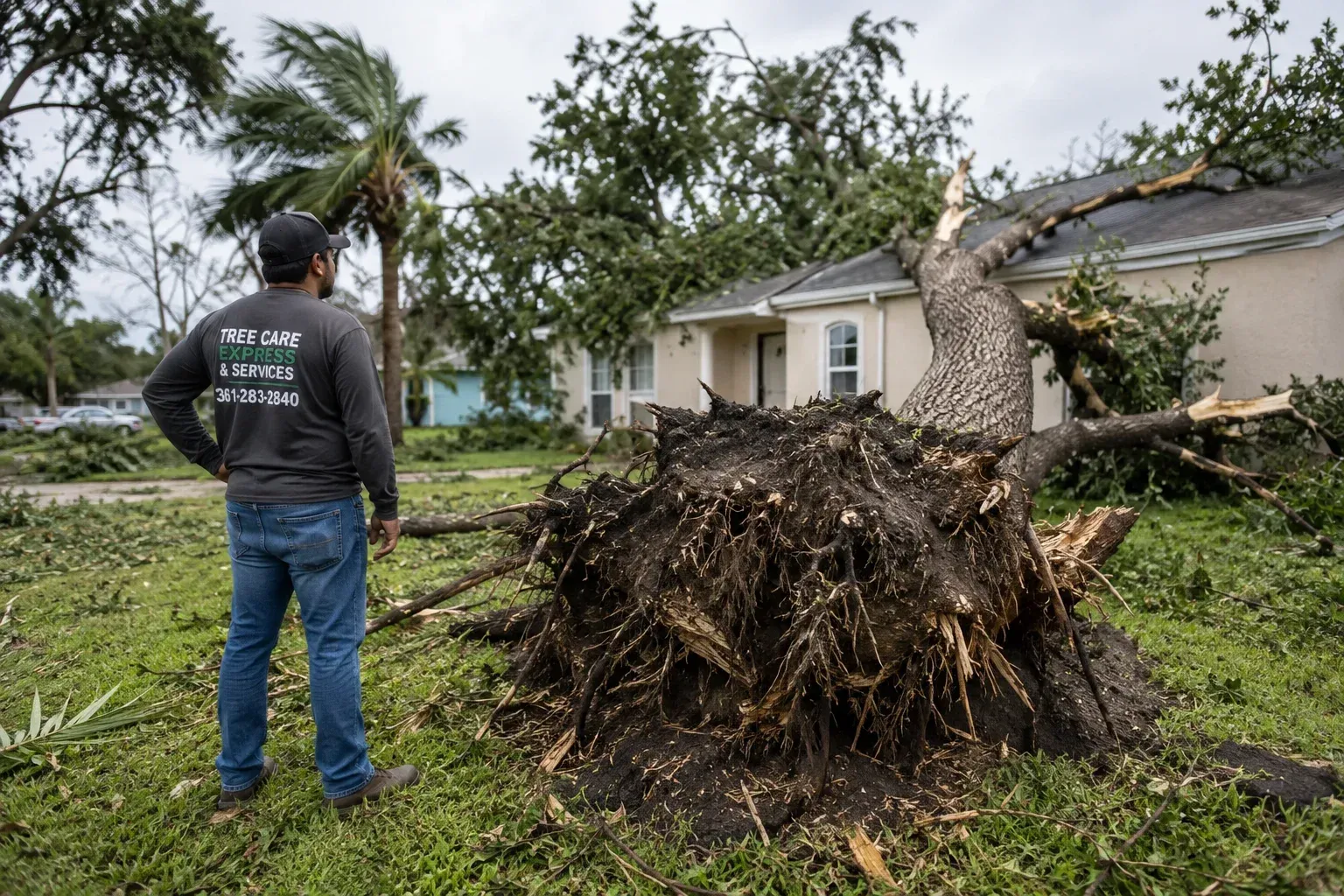
Table of Contents
- Introduction
- What Storm Damage Actually Does to a Tree
- Signs a Tree Needs to Be Removed
- Damage That Usually Does Not Require Removal
- Why Corpus Christi Storms Are Hard on Trees
- What a Professional Assessment Looks At
- What to Do in the First 48 Hours After a Storm
- Conclusion
- Book a Discovery Call
- Frequently Asked Questions
Key Takeaways
- A tree usually needs removal after a storm when the trunk is split, more than half the crown is gone, or the roots have lifted out of the ground.
- Not every damaged tree is a lost cause. Many trees with broken limbs recover with proper pruning and time.
- A new or worsening lean is one of the most serious warning signs, especially when the soil around the base is cracked or mounded.
- Corpus Christi's Gulf storms, saturated soil, and shallow-rooted species like palms create removal situations that differ from other parts of Texas.
- Trees near power lines, structures, or driveways should be assessed by a professional before anyone works around them.
Introduction
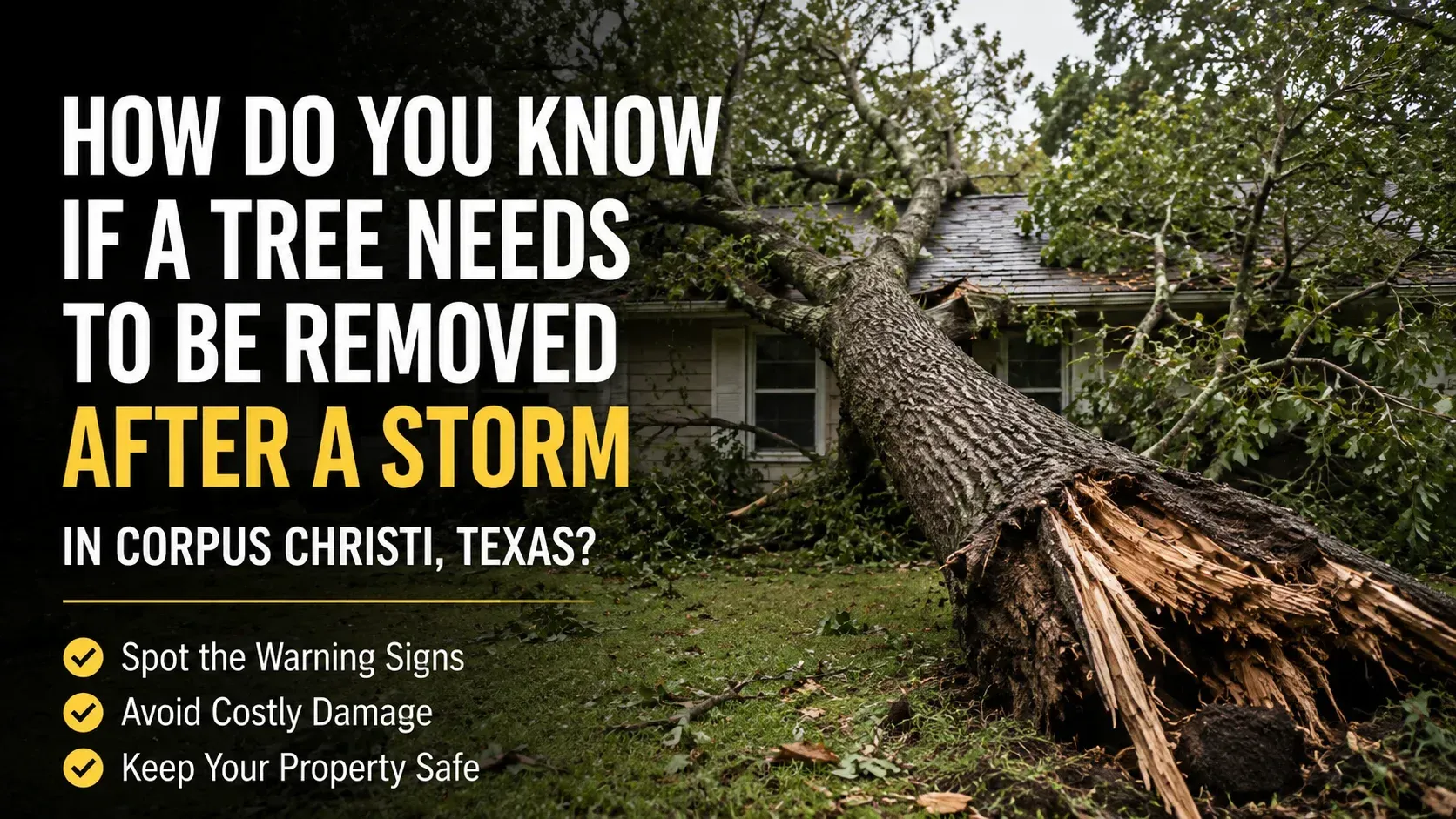
A tree generally needs to be removed after a storm when the trunk is cracked or split, the tree has developed a new lean, more than half of the canopy is destroyed, or the roots have heaved up out of the soil. If the damage is limited to broken branches and torn bark, the tree can often be saved with corrective pruning instead of full removal.
That distinction matters in Corpus Christi more than in most Texas cities. Hurricanes, tropical storms, and hard spring squalls roll in off the Gulf, and the sandy, often saturated coastal soil gives roots less to hold onto. Homeowners here face the same question every storm season: is this tree still safe, or is it a hazard waiting for the next front? This guide walks through the specific signs that separate a salvageable tree from one that needs storm damaged tree removal, so you can make a decision based on the tree's actual condition rather than panic or guesswork.
What Storm Damage Actually Does to a Tree
Wind damage to a tree falls into three broad categories, and each one carries a different level of risk.
Crown damage is the most visible. Snapped limbs, stripped foliage, and hanging branches sit in this category. It looks dramatic, but crown damage alone is frequently survivable.
Trunk damage is more serious. The trunk is the tree's structural spine. Cracks, splits at branch unions, and large sections of torn bark compromise the tree's ability to stand and to move water and nutrients.
Root damage is the hardest to see and often the most dangerous. When wind rocks a tree back and forth in wet soil, roots snap underground or pull loose entirely. A tree can look untouched above ground while its anchor is already broken.
Signs a Tree Needs to Be Removed
These are the conditions where removal is usually the safer call. If you spot any of them, keep people and vehicles away from the tree until it has been evaluated.
A Split or Cracked Trunk
A vertical crack running through the main trunk, or a split where two major stems meet, means the tree has lost structural integrity. Wood does not knit itself back together the way bone does. A tree can seal over a wound, but a load-bearing crack remains a weak point in every future storm.
A New or Worsening Lean
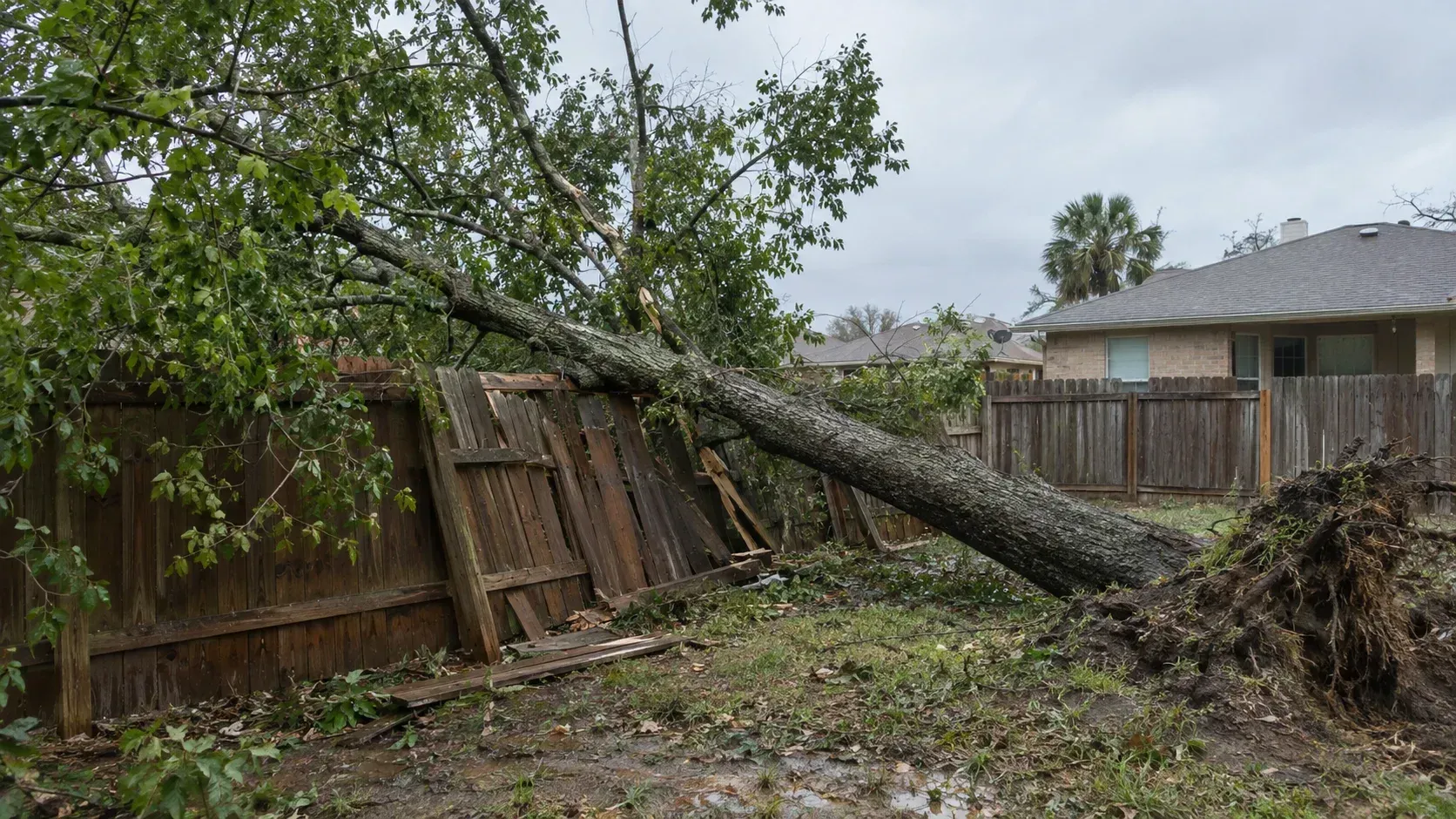
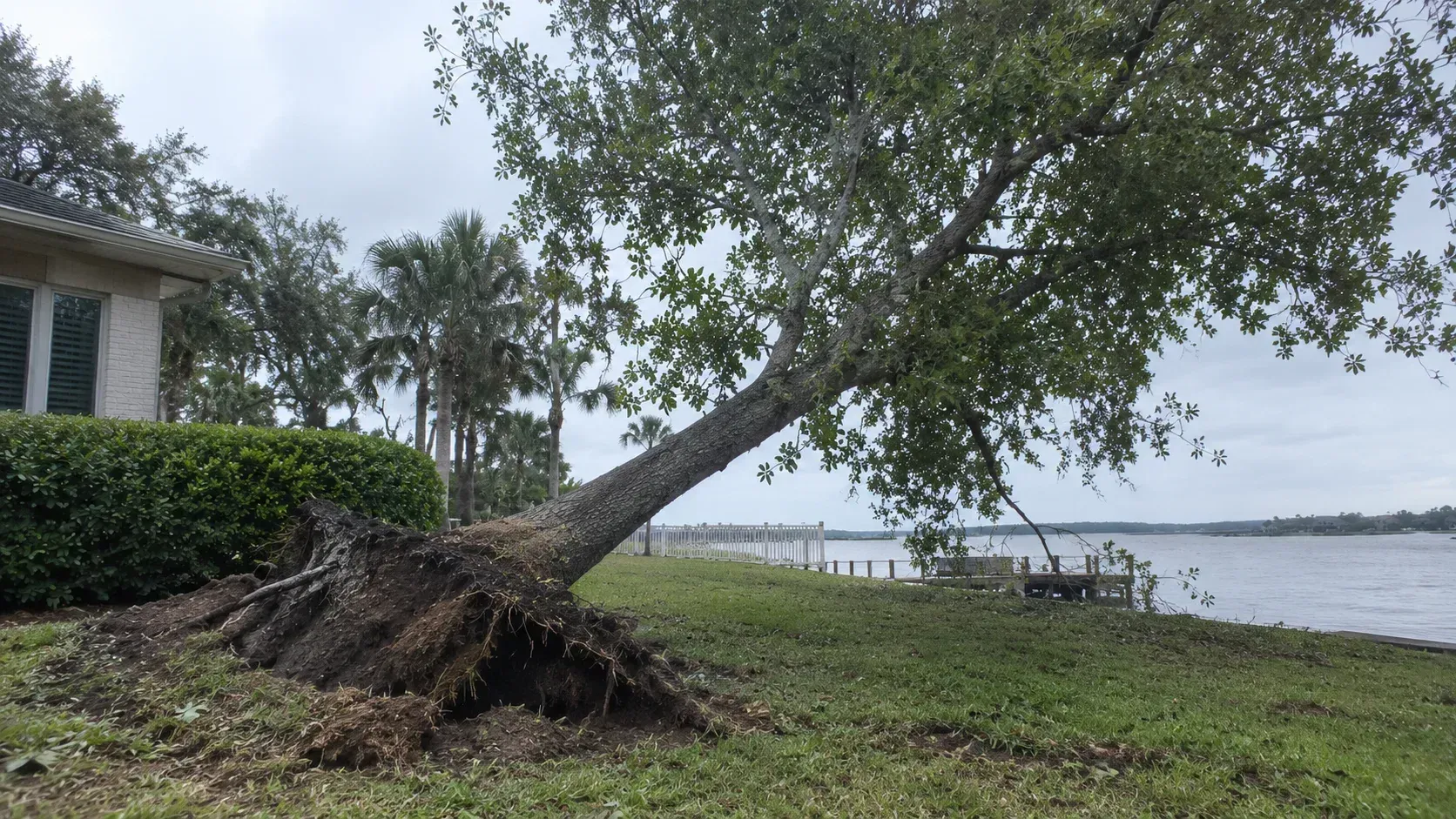
Some trees grow at an angle their whole lives and are perfectly stable. The problem is a lean that appeared after the storm or one that is getting worse. Check the ground on the side opposite the lean. Cracked soil, a raised mound of earth, or exposed roots at the base are signs the root plate is lifting. A tree in that condition can come down without warning, even on a calm day.
More Than Half the Crown Is Gone
Arborists often use a rough 50 percent guideline. A tree that loses more than half of its branches and leaves may not be able to produce enough energy to recover. It also tends to regrow in a rushed, poorly attached way, which sets up the next round of failures. This is a judgment call, and species, age, and overall health all factor in.
Exposed or Heaved Roots
If the storm lifted the root ball, tore major roots, or left the tree visibly rocking in the soil, the anchoring system is compromised. Partial uprooting rarely corrects itself. Small, recently planted trees can sometimes be staked and reset, but a mature tree that has heaved is typically a removal candidate.
The Tree Was Already in Decline
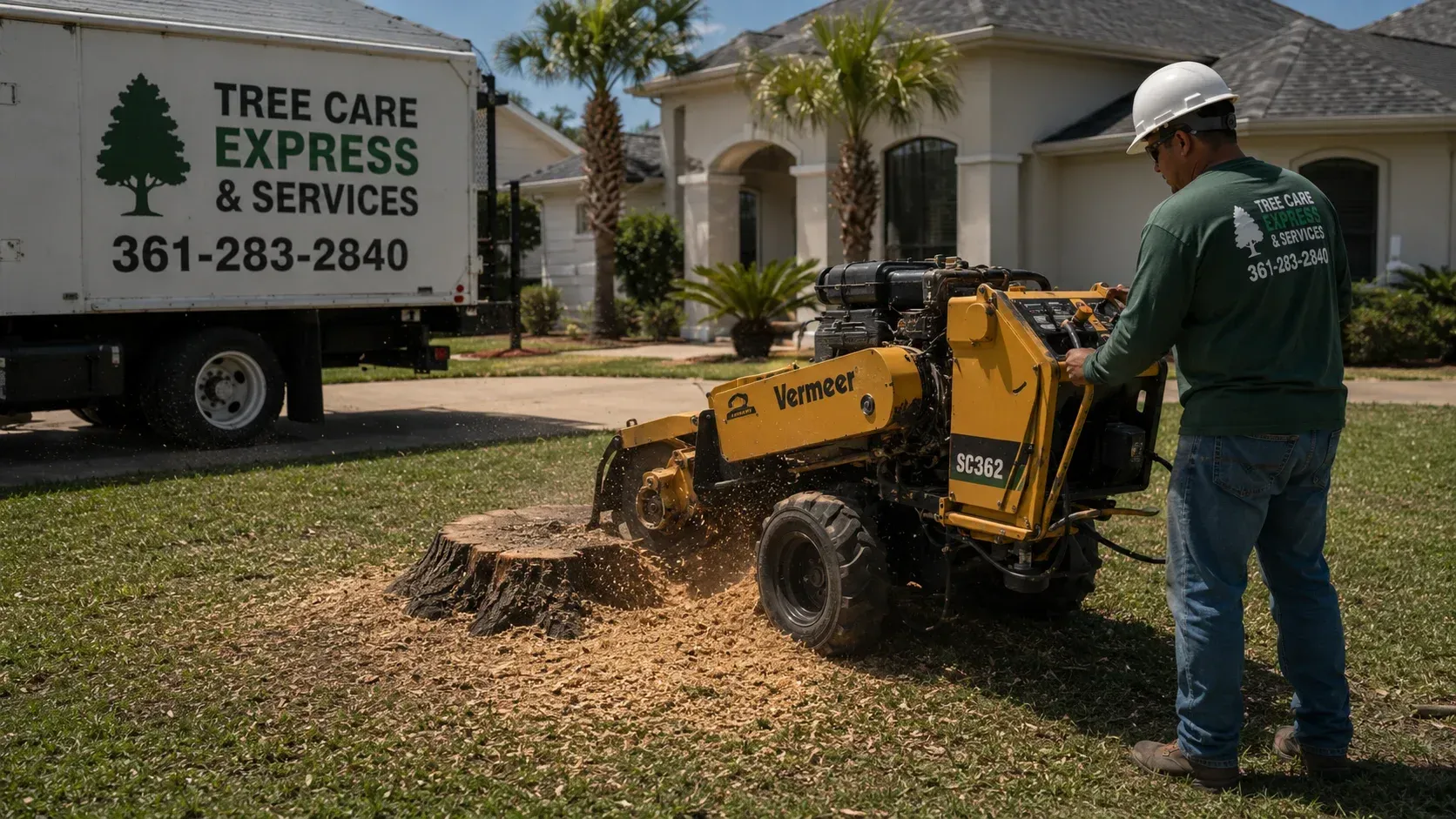
Storms tend to finish off trees that were struggling beforehand. Fungal conks at the base, large dead sections, hollow cavities, or carpenter ant activity all point to internal decay. A storm-damaged tree with pre-existing rot has two strikes against it, and removal is usually the practical option. Once the tree is down, the leftover stump can be handled separately through stump grinding so it does not become a tripping hazard or a home for termites.
It Threatens a Structure or Power Line
Location changes the math. A damaged tree in an open back corner of a lot can sometimes be monitored. The same tree hanging over a roof, a driveway, a fence line, or a service drop cannot. Never attempt to cut anything near a power line yourself. That work belongs to the utility company or a qualified crew.
Damage That Usually Does Not Require Removal
It is easy to overreact after a storm, and plenty of trees get cut down that could have recovered. These conditions are usually treatable:
- Broken limbs on an otherwise healthy tree. Clean pruning cuts back to the branch collar let the tree seal the wounds.
- Torn bark in small patches. Trees compartmentalize minor bark wounds on their own.
- Leaning palms with intact root balls. Palms are surprisingly wind-tolerant, and a healthy palm that shed fronds in a storm often just needs cleanup. Regular palm trimming before hurricane season reduces this kind of debris in the first place.
- Defoliation. A tree stripped of leaves by wind can releaf, sometimes within the same growing season.
The honest answer is that many cases sit in a gray zone. A tree with 40 percent crown loss and a minor trunk wound is neither an obvious save nor an obvious removal, and that is exactly the situation where a trained eye earns its keep
.
Why Corpus Christi Storms Are Hard on Trees
Coastal Bend conditions add a few local wrinkles worth knowing about.
Saturated soil plus wind is the worst combination. Tropical systems dump rain for hours before peak winds arrive. Wet soil loses its grip on roots, which is why so many local trees fail by uprooting rather than snapping.
Salt-laden wind stresses foliage. Trees close to the bays and the Gulf take salt spray during storms, which burns leaves and adds stress on top of the physical damage.
Live oaks hold, hackberries break. The live oaks common across the area are dense and wind-firm, but their heavy limbs cause real damage when they do fail. Fast-growing species like hackberry and Chinese tallow shatter far more easily.
Storm season is long. June through November leaves little time between threats. A tree weakened in one storm may face the next one before it has recovered, which is a legitimate factor when deciding whether to remove it.
What a Professional Assessment Looks At
A qualified crew does more than eyeball the tree from the curb. A proper post-storm evaluation covers the root zone (soil cracking, heaving, fungal growth), the trunk (cracks, cavities, decay, old wounds), the branch unions (especially tight V-shaped forks that trap bark), and the tree's surroundings, meaning what it would hit if it failed.
The assessment should end with a clear explanation of the tree's condition and the reasoning behind any recommendation, whether that is pruning, cabling, monitoring, or full tree removal. Be cautious with door-knockers who appear right after a storm, push for immediate removal, ask for cash up front, or cannot show proof of insurance. Post-storm scams are a documented problem along the Texas coast.
What to Do in the First 48 Hours After a Storm
- Keep your distance first. Assume any leaning tree, hanging limb, or downed line is dangerous.
- Photograph everything before cleanup. Your insurance company will want documentation of the damage as it happened.
- Report anything touching a power line to the utility, not a tree crew.
- Separate cleanup from decisions. Raking debris is fine. Deciding a mature tree's fate can wait a day or two for a proper look.
- Get an evaluation for anything questionable. Trunk cracks, new leans, and heaved roots warrant a professional opinion before anyone climbs or cuts.
Conclusion
The core question after any storm is whether the tree's structure survived, not whether it looks rough. Split trunks, fresh leans, heaved roots, and crown loss above the halfway mark point toward removal. Broken limbs, torn bark, and stripped leaves usually do not. Location raises the stakes: the same damage that is tolerable in an open field is not acceptable over a bedroom.
Corpus Christi's storm pattern, wet soil failures, and mix of wind-firm and brittle species mean local experience matters when reading the damage. Take photos, keep people clear of anything questionable, and base the decision on the tree's actual condition rather than how alarming it looks from the curb.
Book a Discovery Call
If a storm has left you unsure about a tree on your property, a short conversation can bring some clarity. Tree Care Express Services offers assessments for storm-damaged trees across Corpus Christi and the surrounding Coastal Bend communities. There is no pressure to remove anything. The goal is simply to help you understand what condition your tree is in and what your options are, so the decision is yours to make with good information. You can reach the team through the
contact page or by calling (361) 283-2840 during business hours, Monday through Friday.
Frequently Asked Questions
How can I tell if my tree is dangerous after a storm?
Look for a trunk crack, a lean that was not there before, soil lifting or cracking at the base, and large hanging branches. Any one of these means the tree should be evaluated before people or vehicles pass under it.
Can a tree that lost half its branches survive?
Sometimes. Around 50 percent crown loss is the point where recovery becomes doubtful, but young, healthy trees of vigorous species can bounce back from damage that would finish an older or stressed tree. An on-site evaluation is the only reliable way to know.
Should I remove a leaning tree myself?
No. A storm-leaning tree is under unpredictable tension, and it can shift or fall in a direction you do not expect. Leaning trees, large removals, and anything near a structure or power line call for trained crews with the right rigging equipment.
Does homeowners insurance cover storm damaged tree removal in Texas?
Policies vary. Many Texas policies cover removal when the tree fell on a covered structure, and coverage is more limited when a tree falls in the yard without hitting anything. Photograph the damage before cleanup and check the specifics with your insurer.
How soon after a storm should a damaged tree be removed?
Trees that threaten a structure, a driveway, or a walkway should be addressed as soon as it is safe to do so. A damaged tree in an open area is less urgent, but it is wise to have it assessed before the next storm system arrives, since Gulf storm season runs from June through November.
What happens to the stump after a storm damaged tree is removed?
Removal crews typically cut the tree down to a low stump. Grinding the stump out is a separate step that removes the remaining wood below grade, which prevents regrowth and clears the spot for grass or replanting.
Is a leaning palm tree an emergency?
Not always. Palms flex in wind by design, and a healthy palm with an intact root ball often stays stable. A palm that has visibly shifted at the base, with disturbed or mounded soil around it, should be checked before it is assumed safe.